Get Full Government Meeting Transcripts, Videos, & Alerts Forever!
Get email alerts on the Governance topic
No spam. Unsubscribe anytime.
Commissioners push back after City Council move to shrink Disabilities Commission
Summary
Santa Monica City Council approved a first reading of an ordinance to reduce the Disabilities Commission from 11 seats to 9 and later to 7 (by June 2027) and to remove the annual public hearing requirement. Commissioners voiced concerns about representation, quorum, outreach and the loss of guaranteed disability representation; a motion to send a formal letter asking council to keep 11 members failed at the meeting.
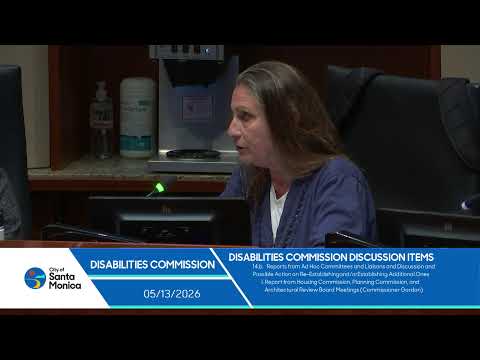
City Council action to revise the boards and commissions ordinance — including a plan to reduce the Disabilities Commission from 11 seats to 9 (immediately) and then to 7 by June 30, 2027, and to remove the statutory annual public hearing — drew sharp reaction from commissioners at the Santa Monica Disabilities Commission meeting in May.
Staff informed the commission that the ordinance passed first reading the previous evening and will return for a second reading on May 26; if enacted then, changes take effect 30 days after council approval. Several commissioners said shrinking the commission would reduce representation and make the panel less able to serve people with mobility or access barriers. One commissioner said, “They place disabled people…on parking spots which are hard to access without a wheelchair,” and tied longstanding housing and parking complaints to the broader concern that residents with disabilities lack adequate representation in city decisions.
Commissioners debated whether to submit a letter to council opposing the change. Chair moved that the commission write a letter asking to keep 11 members; the motion was seconded but failed after individual roll calls and multiple abstentions were recorded, leaving no formal commission letter before the council’s second reading. Commissioners urged colleagues and residents to submit public comment for the May 26 meeting and suggested inviting council staff or councilmembers to explain their rationale to the commission at a future meeting.
Why it matters: The change would alter the size and makeup of a body charged with advising council and staff on disability access, potentially lowering guaranteed representation of people with disabilities and reshaping the pool of volunteers who staff and community organizations rely on for input. Commissioners argued smaller membership could make quorum unreliable for people who need accommodations and reduce the range of lived‑experience perspectives.
Next steps: Commissioners agreed to monitor the May 26 council meeting and to submit individual public comments; some asked staff to circulate the time‑stamped council video and to explore options (ad hoc statements, public comment at council) before the ordinance’s second reading.