Get Full Government Meeting Transcripts, Videos, & Alerts Forever!
Get email alerts on the Mental Health topic
No spam. Unsubscribe anytime.
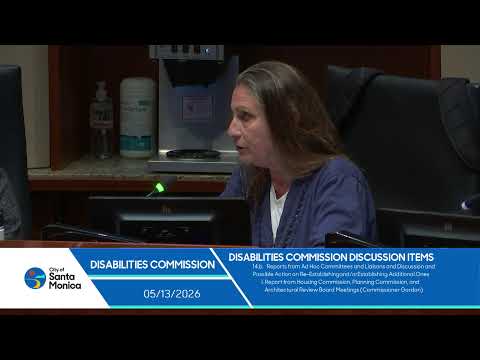
NAMI Westside LA urges more local peer supports during Disabilities Commission meeting
Summary
Britt of NAMI Westside Los Angeles described free peer‑to‑peer and family programs, virtual and returning in‑person options, Spanish‑language offerings and youth education. Commissioners pressed for details on certification, wheelchair access and how peer groups triage participants in crisis.
Britt, a representative of NAMI Westside Los Angeles, told the Santa Monica Disabilities Commission in May that NAMI offers free peer‑to‑peer eight‑week classes, family‑to‑family programs, weekly support groups and school‑based youth education aimed at destigmatizing mental‑health conversations. She said many programs are virtual but that in‑person offerings are returning and that NAMI runs Spanish‑language sessions and a monthly speaker series.
The presentation came during Mental Health Awareness Month and emphasized lived experience: “All of our research and facts … are backed by medical professionals, but the people doing the work on the front lines were not medical professionals,” Britt said, describing peer facilitators as trained but not diagnosticians. She invited the commission and community groups to request presentations or tabling and said NAMI can provide program leads for events at Virginia Avenue Park and other community spaces.
Commissioners asked about program structure and crisis response. Britt said peer support groups are intended as open forums, similar in style to fellowship groups, and are not a medical substitute. “We’re not ever diagnosing,” she said, noting that NAMI provides lists of hospitals and resources rather than individual therapist referrals. When asked about wheelchair access and in‑person logistics, she said in‑person sessions will be wheelchair accessible and that NAMI is working to resume some face‑to‑face programs in summer.
Why it matters: Commissioners and attendees said local peer programs help fill gaps in services and provide low‑barrier options for residents wary of formal clinical settings. Several commissioners recommended posting NAMI slides and program links on the commission agenda so residents can find the information easily. Britt said she will share contact information with the commission and work with staff to coordinate local offerings.
The commission thanked NAMI for the presentation and encouraged coordination with Virginia Avenue Park and other local partners; Britt said she will follow up with staff to provide dates and resources.