Get Full Government Meeting Transcripts, Videos, & Alerts Forever!
Get email alerts on the Water Policy topic
No spam. Unsubscribe anytime.
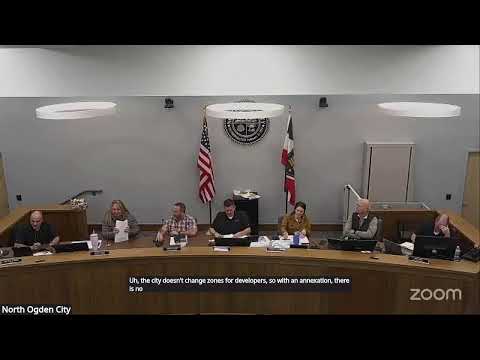
Council pauses on culinary‑for‑irrigation requests after Pine View warns of limits; Hidden Hills offers land for future tank
Summary
Developers for Hidden Hills offered to donate land for a future city water tank in exchange for limited culinary‑water delivery for irrigation, but Pine View and council raised enforcement and precedent concerns. Staff will continue technical work and return with options.
City staff and utility managers told the North Ogden City Council they will continue technical work rather than approve any immediate sale or re‑use of culinary (drinking) water for landscape irrigation after multiple developers asked for exceptions in a water‑constrained area.
Jeff Humphrey, general manager of Pine View (the local secondary water provider), told council his system is fully allocated and that moving to metering and water‑wise landscaping is the responsible path. “Culinary needs to stay where it needs to be,” Humphrey said, arguing that outdoor use is the largest source of consumptive demand and that converting culinary to irrigation without strict caps would be risky.
Geneva, representing the Hidden Hills proposal on the bench above Jake Drive, offered a package of commitments intended to limit long‑term city exposure: a reduced plan (10 estate lots instead of the maximum allowed by the parcel), deed/plat restrictions preventing future subdivision, separate master metering for any culinary irrigation allocation, and donation of a small parcel identified as a desirable future city tank site at about 5,280 feet elevation. “We would love to donate that land to the city to have their future water tank,” Geneva said.
Staff and the council focused on enforceability and precedent. Councilors asked how a temporary allocation would be shut off and who would police landscaping rules years after a homeowner moves in. Pine View and city staff outlined operational options that could limit risk — for example, delivery into a separate vault or a master meter that the city cuts off when an annual allocation is reached — and said metering can allow per‑property portals and usage alerts. Jeff Humphrey said Pine View expects metering and allocation programs to reduce outdoor demand by 20–30% if cities require water‑wise landscaping and modern controls.
Council asked staff to return with a written proposal showing concrete guardrails (time‑limited contracts, automatic shutoffs, required design standards, fee‑in‑lieu or direct capital contributions, and legal mechanisms such as recorded plats or development agreements). Several council members said they were uncomfortable approving permanent culinary irrigation rights and warned that granting exceptions in one place could prompt multiple similar requests across the bench.
Next steps: staff will continue discussions with Pine View and developers, test delivery alternatives (master meter/vault, backflow prevention, metering costs and enforcement mechanisms), and return to the council with options and risk assessments. No policy change or approvals were made tonight.
Why it matters: The council’s choices could determine whether small, uphill developments are built with green yards supplied by drinking water or whether the city insists on strict water‑wise landscaping and waits for permanent secondary solutions. Pine View’s push toward metering and the city’s capacity planning (including the possible tank donation) will shape both supply and policy.