Get Full Government Meeting Transcripts, Videos, & Alerts Forever!
Get email alerts on the School Discipline topic
No spam. Unsubscribe anytime.
Travis Unified board directs staff to design in‑school corrective program after teachers, parents cite rising campus behavior
Summary
Trustees voted to direct the superintendent to develop a districtwide in‑school suspension/corrective program and related behavioral supports after teachers and parents described repeated disruptive and unsafe behavior at Golden West and other campuses. Staff will return with a detailed, legally compliant plan and success metrics.
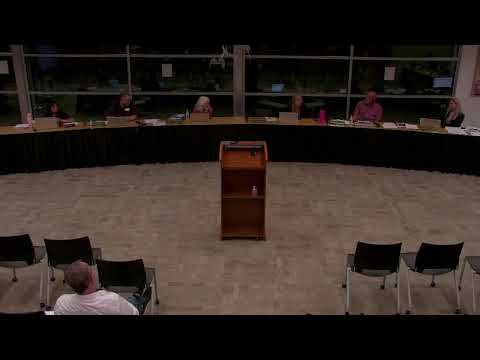
Trustees at the May 13 Travis Unified School District meeting voted to instruct the superintendent to develop a consistent in‑school suspension (ISS) or corrective‑action program and complementary behavioral supports after months of complaints from teachers and parents about escalating student behavior.
The board motion, carried by a 3–1 vote, requires staff to deliver “the nuts and bolts” of a program that keeps students on campus under certificated supervision while providing instruction, counseling and restorative supports. Trustee Matt Vidu, who introduced the recommendation, said the goal is to protect classroom instruction and keep students connected to learning: “The continuous interruption is denying my student a right to an education,” he said during the presentation to the board.
Teachers from Golden West Middle School told trustees the district’s current tools — detention and out‑of‑school suspension — are not stemming repeated offenses. “In‑school suspension, when implemented well, is a program that supports and guides students in crisis,” said Melissa Ferrari, a Golden West science teacher, urging a structured alternative that preserves instructional time and provides targeted intervention.
Superintendent Benson said the district supports the overall philosophy but noted California law constrains how suspension is administered. “In‑school suspension in full transparency is 100% allowed,” she said, but added that recent changes in state education code mean ISS must be treated similarly to out‑of‑school suspension in the categories that permit removal and the number of allowable days. Benson recommended a layered behavioral plan that includes — but is not limited to — ISS and asked the board to give staff time to develop a legally compliant program with staffing, training and clear success metrics.
Trustees asked staff to identify measurable outcomes for the program, suggesting indicators such as reductions in repeat offenders, changes in suspension patterns, and improvements in teacher and student climate surveys. The board discussed piloting approaches at high‑need sites before scaling districtwide; student board member Ava Ambrose suggested a phased rollout beginning at schools showing the greatest need.
Next steps: the board directed the superintendent to return with a detailed proposal — staffing, facilities, costs and metrics — that aligns with state law and district values. Trustees said they expect a plan that emphasizes corrective instruction, restorative practices and consistent application across sites rather than ad hoc local variations.