Get Full Government Meeting Transcripts, Videos, & Alerts Forever!
Get email alerts on the Traffic Impact Fee topic
No spam. Unsubscribe anytime.
Puyallup council adopts traffic-impact fee ordinance to take effect Jan. 1, 2027
Summary
After a public hearing and brief public comment, the Puyallup City Council approved a new traffic impact fee ordinance to begin Jan. 1, 2027; the plan indexes fees to inflation, includes multiple fee reductions and credits, and allows vesting for active building permit applications.
The Puyallup City Council on a second-reading vote approved a traffic impact fee (TIFF) ordinance that staff said will take effect Jan. 1, 2027.
Courtney (Presenter) told the council the fee program is project-specific and may be used only for the projects listed in the traffic-impact fee study. The program will be indexed to inflation and includes policy choices aimed at limiting costs for certain land uses: accessory dwelling units receive a mandated 50% reduction; developments that qualify for a 20-year tax exemption and provide 20% below-market units (and sit within a half‑mile of the transit center) are eligible for a 50% reduction; and the draft includes optional reductions—up to 80%—for early-learning centers and specified low-income uses. The proposal also allows a 10-year lookback credit for a site’s prior land use and a heavy‑truck trip adjustment that raises fees for industrial uses with substantial truck trips. Developers who construct frontage or system improvements are eligible for credits against TIFF obligations.
During the public‑comment period, Aaron Hollberg, director of government affairs for the Pierce County Master Builders Association and a Puyallup resident, warned the council the fees risk raising housing costs and urged staff to refine fee calculations to limit the burden on homebuyers. "We're not against infrastructure," Hollberg said, "but let's get support on how we calculate and collect impact fees to really limit the burden for the consumer." His claim that national studies show residents could pay about $10,000 more under some fee scenarios was presented as public comment and not adjudicated at the meeting.
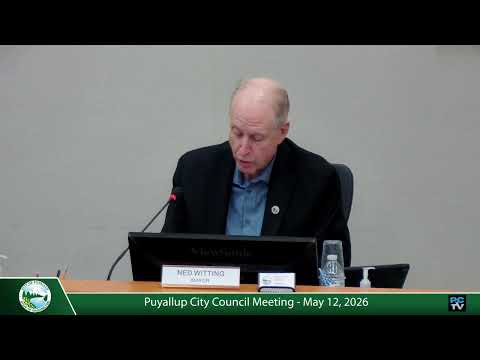
Mayor Whitting called for the motion to approve second reading; the motion passed on recorded affirmation by the council. Council members indicated the ordinance will vest building‑permit applicants to the TIFF schedule in effect when their application vests; staff confirmed vested fees may be paid at permit issuance or deferred until certificate of occupancy or 18 months, whichever comes first.
Staff identified the next procedural steps as adoption of the ordinance (completed by second reading tonight) and implementation work on fee schedules and administrative procedures.
The council approved second reading of the TIFF ordinance and moved on to other business.