Get Full Government Meeting Transcripts, Videos, & Alerts Forever!
Get email alerts on the Commerce Commissioner Testimony topic
No spam. Unsubscribe anytime.
Commerce commissioner explains repeal of advisory council, reinsurance fixes and enforcement limits on benefit forms
Summary
Grace Arnold, commerce commissioner, told conferees the prescription drug advisory council would be sunsetted (not the board), described reinsurance technical changes as administrative for 2027 reimbursements, and said approved plan forms include a long‑standing 120‑day limit on certain home‑health nursing benefits while enforcement matters are handled through complaints.
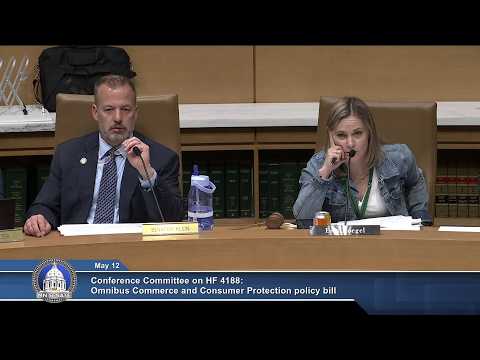
Grace Arnold, commissioner of the Minnesota Department of Commerce, appeared before the conference committee to explain several Senate‑only health and insurance provisions and to answer questions about enforcement and administration.
Arnold said the Senate proposal would repeal only the Prescription Drug Affordability Advisory Council and leave the Prescription Drug Affordability Board in place to perform statutory duties and obtain public input. "The advisory council has a number of members appointed and acts as an adviser to this prescription drug affordability board," Arnold said, and the proposal would sunset the advisory council to eliminate duplicate advisory paths.
On the reinsurance article, Arnold described the changes as technical adjustments to mechanics and timing for reimbursement payments to carriers for benefit year 2027 and said they align with the prior year's agreement; the changes do not alter the fundamental deal, she said. Arnold also confirmed the department can pursue a federal Section 1332 waiver administratively when authorized and said applying for the waiver is operationally separate from whether the legislature authorizes a program.
Committee members pressed the commissioner on how abandoned cryptocurrency accounts would be discovered. Arnold said discovery often depends on custodians or receiving private keys; she acknowledged exchanges are not currently required to notify the state and said unclaimed‑property statutes need modernization to handle new asset types. On home‑health nursing benefits, Arnold said the department approves insurer forms and that the benchmark plan historically has included limits (commonly enforced in practice as 120 days since about 2014); enforcement of whether members receive contracted benefits generally proceeds through complaint channels.
Why it matters: the commissioner's explanations frame many contested reconciliation decisions as technical or administrative and identify areas—unclaimed property for virtual currency and enforcement of benefit limits—where legislative clarification or statutory modernization may be required.
Next steps: conferees asked staff to follow up on specifics (frequency of advisory council meetings, statutory citations for the 120‑day benchmark) and recessed to continue testimony and drafting later in the day.