Get Full Government Meeting Transcripts, Videos, & Alerts Forever!
Get email alerts on the Criminal Justice topic
No spam. Unsubscribe anytime.
Putnam County proclaims Problem‑Solving Court Month; participant testifies to life change
Summary
The board adopted Proclamation No. 2026‑036 establishing Problem‑Solving Court Month in May; Judge Mark Johnson, staff and a current participant, Joey Patterson, described the program's role in recovery, veteran support and reduced recidivism.
Putnam County commissioners unanimously approved Proclamation No. 2026‑036 on Tuesday, declaring May as Problem‑Solving Court Month and recognizing the county's drug‑court and veterans treatment programs.
Judge Mark Johnson (Seventh Judicial Circuit) read the proclamation, saying problem‑solving courts have been "restoring lives, reuniting families, and making communities safer for more than 30 years." The proclamation cited program metrics: roughly 275 individuals have completed the Putnam County Drug Court Program since its inception in 2002, and nearly 150 veterans have graduated from the joint veterans treatment court since 2017.
Judge Johnson introduced drug‑court staff and community partners — including coordinator Jackie Pollock, a Department of Corrections representative and SMA Healthcare counselor Susette Young — and thanked the board for its ongoing support. "This is not simply a matter of support. It's an investment you're making in our community," he said.
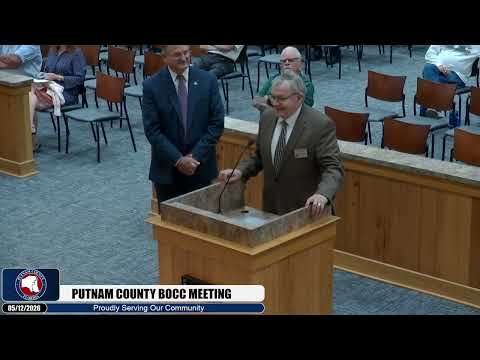
Participant Joey Patterson addressed the commission, describing how the program imposed structure, accountability and tools that helped him repair family relationships and remain clean. "Drug court didn't just make me stop using. It forced me to look at myself honestly," Patterson said. He urged continued investment in programs that reduce recidivism and save taxpayer dollars.
Commissioners praised the program and allowed participants to be recognized for photographs and informal remarks; the proclamation and public testimony underscored county support for treatment‑based alternatives to incarceration.