Get Full Government Meeting Transcripts, Videos, & Alerts Forever!
Get email alerts on the Land Use topic
No spam. Unsubscribe anytime.
Commission approves first reading of updated subdivision regulations amid developer concerns
Summary
The commission published a first reading for a new subdivision code to replace outdated rules; staff and a consultant said the code modernizes plats, adds financial guarantees and performance bonds, but developers and commissioners raised cost concerns including a shift to 100-year flood standards and bonding costs.
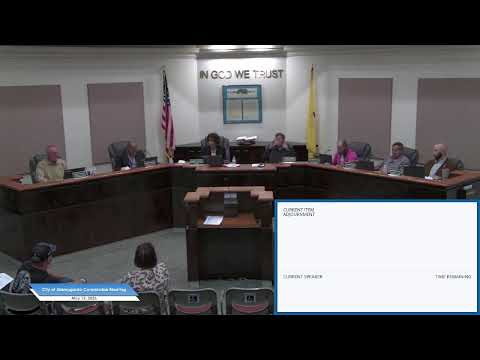
The Alamogordo City Commission voted on May 12 to publish a first reading of an ordinance that would repeal Chapter 22 and replace it with updated subdivision regulations in Chapter 20. City planning staff and a consultant from Bohanan-Houston (Liz Treat) presented the draft, which reorganizes plat processes, specifies submittal requirements, and introduces performance financial guarantees and one-year warranty bonds.
Consultant Liz Treat said the update aims to bring local rules into line with contemporary standards and to make review procedures clearer. "The updated code includes performance, financial guarantee, and warranty bond mechanisms," Treat said, adding that the existing regulations were adopted more than 20 years ago and are organized like "a long grocery list."
Commissioners and members of the development community pressed staff on several points: moving from a 50-year to a 100-year flood standard for some elements, who will maintain retention/detention ponds over the long term, the cost impacts of bonding and required traffic-impact analyses, and whether the city will accept infrastructure long-term or require Homeowners Associations (HOAs) to retain responsibility. Staff said many of those technical thresholds remain to be finalized in technical standards and that phasing and extensions are possible.
Shelby Abbott, assistant city planner, and Director Shelley Dhanic Baron answered questions about how the city intends to use performance bonds and warranty bonds, how developers may phase projects, and the potential for extension requests when sidewalks and other improvements may be installed after final plat approval. The ordinance will return for further public input and additional refinement; the earliest possible next hearing is June 9, staff said.
Next steps: staff will collect additional developer feedback, refine technical standards (including thresholds for traffic studies and bonding formulas) and present the ordinance for subsequent readings.