Get Full Government Meeting Transcripts, Videos, & Alerts Forever!
Get email alerts on the Transportation topic
No spam. Unsubscribe anytime.
Wake County transportation survey finds staffing, communication gaps; district to pilot radios and tablet navigation
Summary
A WCPSS presentation of a 554-response transportation survey identified understaffing, mixed satisfaction and poor dispatch communication; the district will pilot radios and turn-by-turn navigation on bus tablets, develop vendor accountability tools and study safety-assistant hours.
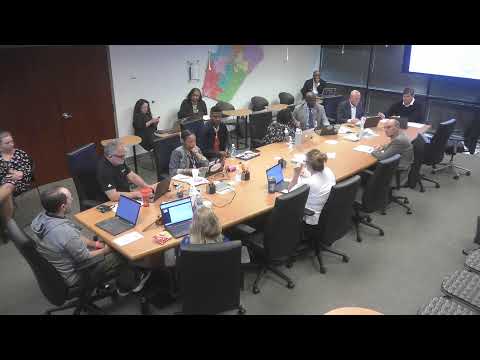
Wake County Public School System staff onstage at a facilities committee meeting presented results of a two-week transportation survey and described immediate operational pilots and staffing work to address chronic service gaps.
The transportation presenter told the board the survey drew 554 responses from a department with roughly 900 employees, with bus drivers representing about 59% of respondents and safety assistants about 13%. “We had a workforce range from one year to more than 21 years; some staff reported 32 to 47 years of service,” the presenter said, summarizing participation and tenure patterns. The survey produced an overall satisfaction score of about 3.5 out of 5 among respondents.
Why it matters: board members repeatedly pressed staff that late cabs and inconsistent routes are harming student arrival times and creating extra work for building staff and teachers. The survey identified communication with dispatch as the top daily challenge and flagged concerns about inconsistent discipline handling between drivers and school administrators.
What the district will do: staff said they are adding short-term vendor capacity and operational changes to reduce late runs. The presenter said three new vendors have been recruited for EC cab/van work and that the district expects to put roughly 15 additional cabs/vans into service initially, with room to grow. To improve communications and contractor accountability, staff plan an evaluation metric for contractors and will concentrate vendor operations into geographic zones so vendors can be managed locally rather than countywide.
Pilot projects and training: to fix dispatch gaps, transportation staff will pilot radios on buses using a Blackstone/Zello solution during a roughly one-month summer pilot in a single district so the vendor can be tested in silos (for example, Apex or Stone Mountain). “We’re going to pilot something during the summer to see how it works,” the presenter said, describing plans to break radio traffic into district-level channels to limit chatter. The district also plans a pilot of turn-by-turn navigation on bus tablets to replace paper directions and a rollout of Vector training software, which staff said will let employees complete brief paid training modules (the longest module ~30 minutes) and be used productively on days with inclement weather.
Safety assistants and hours: board members raised repeated questions about whether safety assistants routinely receive eight hours of paid work. Staff said schedules vary: some safety assistants routinely obtain eight hours by being assigned to morning, midday and afternoon duties while others are assigned shorter routes. The presenter said the district will run a report to determine who is receiving full-day hours and will canvass safety assistants about their scheduling preferences. Staff emphasized they do not have universal eight-hour contracted guarantees for these positions and that the district is working to offer meaningful paid options (training, midday assignments) rather than unpaid or “offensive” tasks.
Discipline and school-based support: several board members said the underlying problem is not only student behavior but also inconsistent follow-up by school administrators after drivers file referrals. Staff suggested further training and stronger procedures for documentation and follow-up and agreed to include a deeper process-level presentation (a requested “Transportation 101”) at a future facilities meeting to show how TIMS routing, vendor cabs/vans, EC services and communication pilots interoperate.
Next steps: staff will (1) run reports on safety-assistant hours and staffing patterns, (2) implement the radio and tablet-navigation pilots this summer, (3) issue vendor-evaluation tools tied to geographic zones, and (4) return with a fuller presentation including verbatim survey comments and process maps.
The committee did not take a committee-level vote on these operational pilots during the presentation; items will return for operational follow-up and reporting.