Get Full Government Meeting Transcripts, Videos, & Alerts Forever!
Get email alerts on the Stormwater Fees topic
No spam. Unsubscribe anytime.
Port Orchard committee discusses stormwater fees by impervious surface and a shrinking Well 7 amid early drought
Summary
The committee reviewed how stormwater fees are calculated using impervious surface units (1 ISU = 3,000 sq ft), discussed a church appeal and treatment‑credit options, and heard that Well 7 is underperforming with short‑term measures and odd/even watering recommendations planned as drought outreach.
Port Orchard — Port Orchard—ommittee members reviewed how the city's stormwater utility calculates fees based on impervious surface and discussed potential fee adjustments, crediting programs and systemwide revenue implications.
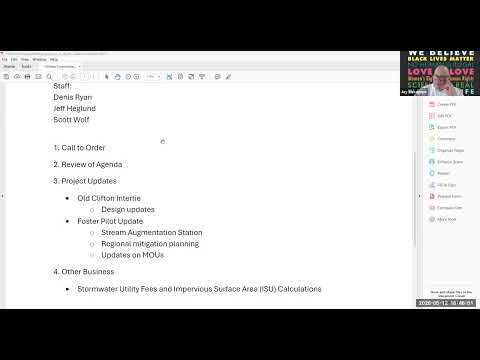
The committee was told the fee structure is measured in impervious surface units (ISU); a single‑family residence is treated as one ISU and the methodology counts one ISU per 3,000 square feet when assessing larger properties and parking lots. Staff said the fees collected fund the city's stormwater master plan and the city—xecutes systemwide treatment obligations to protect Sinclair Inlet.
Members raised a recent public comment from a local church asking whether on‑site treatment could reduce its assessed impervious surface. Staff said the county operates a program that can reduce impervious surface calculation if an engineered on‑site treatment system meets county standards, but warned that reducing billed impervious area for some customers reduces system revenue and could shift costs to residential customers.
A planning and development approach that encourages low‑impact development (LID) and site treatments was discussed as a way to lower future impervious area and pollutant loads. The committee did not take any vote on changing the rate structure on May 12; staff said it would pursue follow‑up with the church and consider whether a city policy change is warranted.
Separately, Dennis Ryan, the public works director, updated the committee on Well 7: the well is producing less water than historically expected and staff is evaluating options including adding a temporary pump, installing a pressure‑reducing valve (PRV) to move water between zones, and scheduling a rehabilitation of the well in the fall when demand drops. Ryan said staff would continue to design fixes and bring requests for equipment and power work as needed.
Ryan also warned of early hot, dry conditions and said staff will push odd/even watering days and other conservation outreach; he noted the city is already in drought conditions and that a statewide emergency has been declared.
What's next: staff will follow up with the church about possible treatment credits, pursue LID opportunities with planning staff, return with any recommended rate‑structure changes, and bring equipment/PRV requests for Well 7 as designs and funding are finalized.