Get Full Government Meeting Transcripts, Videos, & Alerts Forever!
Get email alerts on the School Budget topic
No spam. Unsubscribe anytime.
Yorktown Central School District proposes 2.38% tax-levy change to fund student programs and mental-health staff
Summary
A district presenter outlined a proposed budget that keeps programs intact, adds a high-school social worker and an elementary psychologist, expands courses including AI and AP cyber security, and reflects a 2.38% tax-levy change within the allowable cap; the SRO contract increase was tied to police collective bargaining.
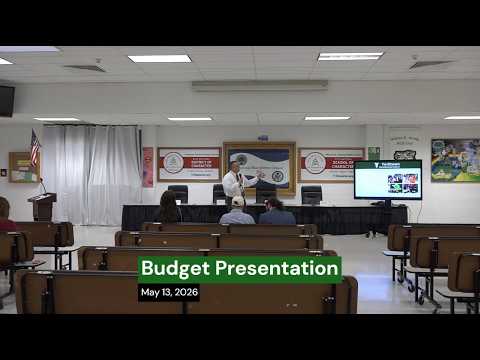
A presenter for the Yorktown Central School District said the proposed budget "tells a story" about the district's priorities and would preserve existing programs while adding staff and course offerings to support students.
The presenter said most district dollars "are spent on people" and highlighted academic successes, including three students competing at the International Science and Engineering Fair and three Regeneron Science Talent Search top-300 honorees. The district's newsletter, the presenter added, recently featured those achievements and multiple recognitions such as Newsweek rankings and awards for music education in both 2025 and 2026.
Under the proposal, the district would maintain class sizes at or below board guidelines and add personnel to address growing mental-health needs, including a social worker at the high school and a psychologist at Krompond. The presenter described more than 100 co-curricular offerings and said new course development would include classes related to artificial intelligence and an AP cyber security offering.
Budget pressures cited by the presenter include a 5% rise in health-insurance costs, changes in teacher retirement-system figures (reported as a roughly $500,000 reduction in one line but increases elsewhere), higher transportation costs and an increase in the school resource officer (SRO) contract. The presenter said the district planned to use fund balance to offset some of those increases.
On the SRO contract specifically, an audience member asked why the cost rose by $68,000. The presenter said the change "is a function of the contractual increases with the Yorktown Police Department's collective bargaining agreement," and that the total reflected raises and compensation across the five officers who work across the district.
The presenter said the district is proposing a 2.38% tax-levy change, which is "within the maximum allowable tax levy cap" and therefore does not require an override. He estimated the tax-rate impact at about a 2.11% increase in the town of Yorktown (roughly 96% of the district's tax base). He said other municipalities in the district would see different effects: about a 2% increase in Newcastle and larger decreases in some small portions of the tax base, which the presenter attributed to equalization-rate calculations by assessors.
The presenter framed the budget as an effort to add student supports and new opportunities while remaining mindful of taxpayers, and encouraged residents to vote on the budget at the annual vote (the presenter said this year's vote is May 19, with polls open 7 a.m. to 9 p.m. at French Hill on Baldwin Road). He also thanked the town for negotiating a modest SRO increase and noted meetings with Chief Noble and Supervisor Lockerman.
The presentation closed with contact information for the district communications office and an invitation for questions at communications@yorktown.org or by phone to the district office.
The district will proceed to its public panel immediately following the presentation; the budget vote and any formal adoption will follow the district's established procedures.