Get Full Government Meeting Transcripts, Videos, & Alerts Forever!
Get email alerts on the Budget And Lcap topic
No spam. Unsubscribe anytime.
Kern County presents draft LCAP and proposed budget; ADA decline drives revenue shift
Summary
Kern County Superintendent staff previewed the 2026–27 county LCAP and the county school service fund budget; presenters highlighted alternative-education enrollments, equity multiplier funding, and a projected drop in average daily attendance that will lower LCFF revenue in the coming year, and trustees asked for clarifications on metrics and service delivery.
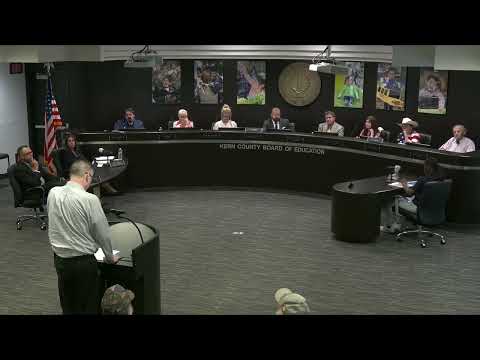
Kern County Superintendent of Schools staff presented the county Local Control and Accountability Plan (LCAP) for 2026–27 and a proposed County School Service Fund budget at Tuesday’s board meeting, previewing material that will return to the board in June for adoption.
Desire Vonflu walked trustees through the LCAP’s five goals — social-emotional development, academic achievement, student engagement and climate, services for foster youth, and special education — and described the county’s alternatives/RISE programs. She said the county office has served nearly 1,300 students in its community and court schools, representing just over 2,000 enrollments overall, and noted average program stays (about 36 days for students served during incarceration; about 78 days for students in community schools).
On funding, staff explained the "equity multiplier" (state-directed supplemental funding aimed at students who move frequently) and went through a sample LCFF calculator output. Jonathan (budget staff) summarized the proposed general-fund changes and answered trustee questions.
Finance staff said the general fund is projected to fall from roughly $359 million to about $340 million next year, driven in part by a projected decline in average daily attendance (ADA) used for funding calculations — staff estimated funded ADA would move from 546 this year to 476 next year because the three-year rolling average that temporarily included a COVID-era year will drop out. Staff warned that one-time grants received this year are not assumed for next year and that some local fee-for-service revenues are also being reset.
Trustees asked detailed questions about student-survey response rates, how districts compare regionally, graduation-rate calculations for credit-deficient students who enter alternative programs, chronic absenteeism and transportation supports (e.g., bus passes), and community partners listed in the plan. Presenters said staff will continue to consult with districts and community partners and that a formal recommendation for adoption will be presented at the June meeting.
No formal adoption occurred Tuesday; the public hearing provided an opportunity for questions and for the board to request additional clarifications before the June action item.