Get Full Government Meeting Transcripts, Videos, & Alerts Forever!
Get email alerts on the Staff Vetting topic
No spam. Unsubscribe anytime.
Former investigator urges continuous vetting, periodic testing for school staff
Summary
Joel McKay, a retired police officer and federal background investigator, urged the Kern County Board of Education to consider ongoing security investigations, periodic background checks and reasonable drug-testing policies to protect students and preserve public trust; trustees asked for staff follow-ups on local practices and legal limits.
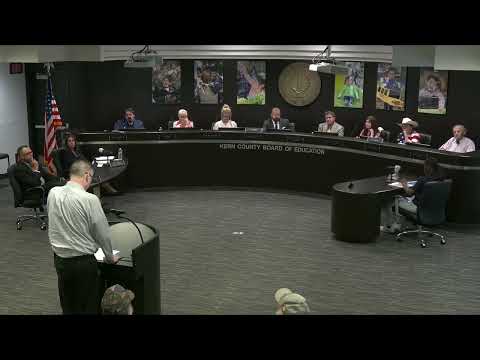
Joel McKay, who identified himself as a retired police officer and a federal background investigator and special agent, told the Kern County Board of Education on Tuesday that schools should adopt periodic security investigations and other ongoing accountability measures for employees.
"Regular reviews help ensure that those entrusted with our children continue to meet the standards required for such an important role," McKay said in a 20-minute presentation. He cited federal continuous-vetting programs administered by agencies such as the Defense Counterintelligence and Security Agency (DCSA) as models that detect early signs of risk without wholesale removal of employees.
McKay said local media reporting and publicly documented educator arrests in Kern County show the consequences when misconduct is not identified and handled. He recommended a package of measures including periodic background checks (every three to five years or sooner), reasonable suspicion and post-incident drug testing, and maintaining up-to-date CPR and first-aid certification for teachers.
Board members pressed McKay and later staff on the limits of local authority. McKay acknowledged that fingerprint checks and initial pre-employment screening reveal convictions but do not capture unreported conduct; he said additional checks of social media and peer interviews can provide early warning signs.
Trustees and staff noted legal constraints. A county administrator said California requires fingerprint-based background checks at hiring and that districts are notified when an employee is arrested; she also described a newer state requirement that districts responding to hiring inquiries must disclose prior misconduct and reasons for departures when asked by prospective employers.
Several trustees asked staff to return to the board with details on what the county and local districts already do, and to describe the legal and procedural steps required before implementing periodic testing or other enhanced vetting. Staff cautioned that random drug testing of employees is not permitted under current state law except in narrowly defined roles (for example, commercial drivers), and that investigation or testing in most situations requires documented cause and coordination with law enforcement.
McKay framed his recommendations as preservation of public trust rather than punishment: "It's not about getting people; it's about catching identity concerns early, and ensure standards are upheld responsibly and fairly," he said.
The board did not take action on policy changes at the meeting; trustees asked staff to prepare follow-up information about existing district practices, reporting obligations under recent state law changes, and what reforms could be pursued within statutory limits.