Get Full Government Meeting Transcripts, Videos, & Alerts Forever!
Get email alerts on the Housing topic
No spam. Unsubscribe anytime.
North Ogden staff urges overlay zone to meet state housing rules and protect road funds
Summary
Community and Economic Development Director Scott Hes told the Planning Commission that adopting an affordable home-ownership density bonus would help the city meet state moderate-income housing requirements, protect about $1 million in B & C road funds and reduce annual reporting burdens while creating modest infill housing opportunities.
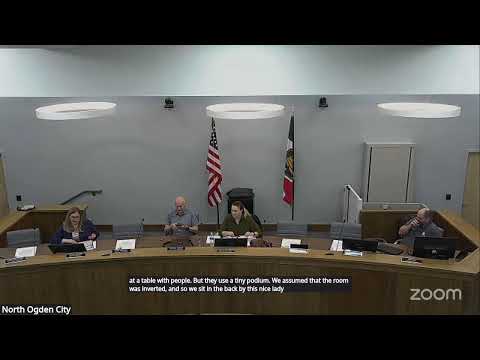
Community and Economic Development Director Scott Hes told the North Ogden City Planning Commission that adopting an affordable home-ownership density bonus (a state-listed 'BB' option) would both help the city meet new state requirements for a moderate-income housing element and protect transportation funding the city currently receives.
Hes opened the quarterly training by framing land use as fiscal policy and said the state’s Land Use Development and Management Act (LUDMA) requires certain cities to maintain a moderate-income housing element. He said the city chose three strategies from the state’s menu but that recent legislative changes added automatic-compliance paths (including BB density bonuses) that can reduce annual reporting and secure compliance.
Hes warned of direct financial consequences for noncompliance, saying the city could lose its B & C road funds — "almost a million dollars a year" — and could face a per-day penalty he cited at roughly "$250 per day" payable to a state housing fund, which he estimated would amount to about $91,000 in a breach scenario. "This thing has stressed me out for three years," Hes said, arguing that a clear code change would be worth staff time and budget certainty.
Under the BB framework as described by Hes, the overlay would allow projects in areas with an underlying density of less than six dwelling units per acre to be administratively entitled to up to six units per acre (a 7,200-square-foot lot equivalent). Projects that use the tool would need at least 60% of units deed-restricted for owner-occupancy for five years, and at least 25% of single-family units in the project must qualify as affordable (defined in the presentation as owner-purchase at up to 120% of area median income or rental at 80% AMI). Hes noted Weber County's area median income is about $80,000 and used that as an illustrative anchor for affordability calculations.
Hes and commissioners emphasized the BB is a modest density adjustment rather than a wholesale change; he gave an example in which a two-acre R15 project that would typically yield 10 homes could be allowed to develop 12 homes under the bonus. He added that zoning caps (the city's code currently limits by-right development to 15 units per acre) and site constraints such as slope and infrastructure often limit how much density can, in practice, be increased.
Commissioners pressed staff on enforcement and tracking of deed restrictions and buyer eligibility. Hes said deed-restricted units are recorded against title and often maintained through HOA provisions, but tracking buyer incomes and resale prices is more difficult and would require additional administrative steps.
Hes recommended the commission consider adopting the overlay to obtain the state 'green light' and reduce staff reporting; he asked commissioners to mark maps identifying where smaller-lot single-family zones might be appropriate so staff can return with a map-driven recommendation to the City Council and a potential legislative package. The commission did not take a formal vote on the overlay during the training.
What happens next: staff asked commissioners to mark candidate areas on large-format maps or email their notes; staff will return with workshop materials and a recommendation to the council. The training emphasized that the overlay is a tool to encourage scattered, small-scale infill rather than concentrated multifamily development and that market conditions and engineering constraints will influence uptake.