Get Full Government Meeting Transcripts, Videos, & Alerts Forever!
Get email alerts on the Education Budget topic
No spam. Unsubscribe anytime.
Shelton residents, teachers and students urge aldermen to fully fund school budget, warn cuts would eliminate sports and staff
Summary
Dozens of Shelton residents, students and educators told the Board of Aldermen that a mayor-proposed 0% increase would force layoffs, cut programs and end athletics; the Board of Education and superintendent called for a baseline allocation to meet contractual obligations and avoid immediate losses.
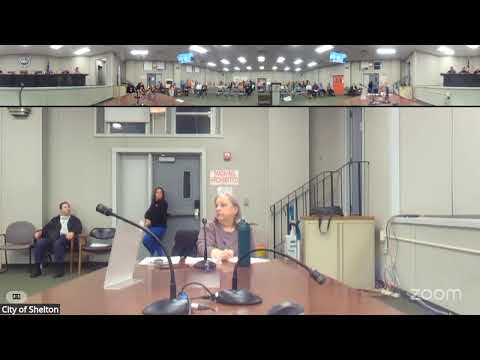
Dozens of Shelton residents, parents, teachers and students packed city hall on May 5 for a public hearing on the city’s 2026–27 budget, urging the Board of Aldermen to approve the Board of Education’s requested funding and warning that the mayor’s proposed 0% increase would force program and staff cuts.
Superintendent Ken Sarinich, introduced by the clerk as the first speaker, told the aldermen the BOE had submitted a revised request that “represents only the minimum amount required to avoid immediate reductions to any staff and any of our programs.” He and multiple BOE speakers said the district faces rising special-education costs and employee-benefit increases that are not covered by the mayor’s proposal.
The hearing then opened to the public. Parents and teachers gave examples they said illustrated the stakes: lost culinary and elective courses, depleted consumable budgets for career-technical education, growing special-education caseloads, and larger class sizes. Several speakers cited the BOE’s estimate that roughly $2.7 million would be needed to meet contractual obligations (the figure was spoken in the hearing as the BOE’s baseline); they said a 0% increase is effectively a cut because it does not cover known, mandated cost increases.
Teachers and support staff described classroom conditions they said were already strained. “We are bursting at the seams,” said Jennifer Plant, a special-education teacher at Elizabeth Shelton School, citing larger caseloads and insufficient adult support. Students and coaches warned that athletics and extracurriculars—programs they and alumni credited with academic and college-preparation benefits—were at risk. Multiple students said losing sports and AP courses would reduce future scholarship and college opportunities.
Board of Education members and the BOE’s chair defended the budget they submitted as transparent and based on contractual obligations. In remarks near the end of the hearing the BOE chair acknowledged a calculation error in a status‑quo figure that had caused confusion during earlier meetings and said the error was his responsibility; he asked aldermen to continue working with BOE staff on accurate numbers.
The hearing record shows strong, repeated testimony in favor of funding the BOE request. Speakers urged the aldermen to weigh long-term economic and community impacts—property values, workforce development and student outcomes—against near-term tax-rate arguments. Several commenters also urged more transparent, line‑item budget presentations from city leadership.
Procedure and next steps: the chair asked for a motion at the close of the public-comment period; a second was called and a vote was requested, but the transcript ends without a recorded outcome or a formal vote result at this hearing.
What’s next: Aldermen indicated they will continue workshops and follow-up discussions on two BOE cost drivers the speakers repeatedly named—special-education excess costs and employee benefits—before adopting a final budget.