Get Full Government Meeting Transcripts, Videos, & Alerts Forever!
Get email alerts on the Baltic Security topic
No spam. Unsubscribe anytime.
Chair frames Baltic defense as central to NATO credibility and pushes SHADOW Act
Summary
At a House Committee on Foreign Affairs hearing opening, the committee chair said Estonia, Latvia and Lithuania are frontline NATO allies facing both conventional and hybrid threats, introduced HR 7632 (the SHADOW Act) to create a State Department coordinator for hybrid warfare, and urged stronger deterrence and readiness.
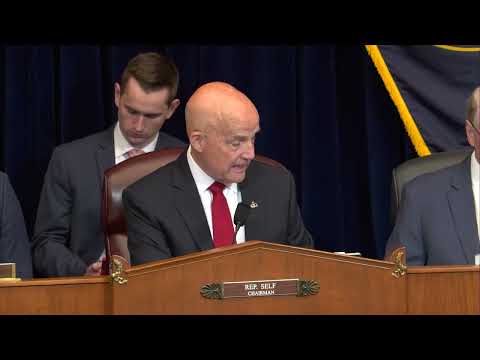
The chair of the House Committee on Foreign Affairs opened a hearing on Baltic security by calling Estonia, Latvia and Lithuania NATO's "Eastern frontier" and saying their defense is "a direct measure of the alliance's credibility and core US national security interests." The chair framed the Baltic states as frontline partners confronting both conventional threats and persistent, multi-domain hybrid warfare.
The chair described hybrid threats "being employed every day"—including cyber attacks, malign influence, economic coercion, weaponized migration and efforts to exploit ethnic and political divisions—and said the committee has already held hearings examining their impact on U.S. and allied interests. "These threats are not theoretical," he said, arguing that the transcript of recent events in Ukraine offers practical lessons for allied preparedness.
During his opening remarks the chair introduced HR 7632, the SHADOW Act, saying the legislation "builds directly on the findings of the Europe subcommittee work" and would "systematically identify, analyze, and counter hybrid threats before they escalate further." He described a key provision as establishing "a hybrid warfare accountability coordinator at the State Department to enhance our efforts, enabling faster attribution, stronger information sharing, more coordinated responses, and greater resilience across NATO," and said the bill "passed out of committee unanimously." These descriptions were presented by the chair as the bill's intended design; the bill's text and further implementation details were not provided in the opening statement.
Turning to conventional force considerations, the chair warned that the trajectory of the war in Ukraine "will shape the Baltic security environment for years to come," saying combat-experienced Russian units drawn into Ukraine could be reconstituted and repositioned on the borders of the Baltic republics after the conflict. "There is a real risk that Russia may position its battle-hardened troops on the borders of the Baltic Republics," he said, and added that even a ceasefire could redirect, rather than reduce, the threat.
The chair also noted that the Baltic states are not "security freeloaders," saying Estonia, Latvia and Lithuania historically lead NATO in defense spending as a share of GDP and commended Poland and Norway for joining them among the top five leaders in defense expenditures in 2025. He argued that allied presence alone is insufficient: "Credibility requires more than presence. It requires capability," and emphasized the need for ready forces, sufficient stockpiles and a defense industrial base able to sustain prolonged conflict.
The chair closed by saying the hearing would seek a "clear-eyed assessment and actionable recommendations" and expressed anticipation for witness testimony and a rigorous discussion of how to confront evolving threats before they destabilize the region and undermine transatlantic security interests. No formal votes or decisions were recorded in the opening remarks.
The committee's next steps and the witness roster were not specified in the opening statement.