Get Full Government Meeting Transcripts, Videos, & Alerts Forever!
Get email alerts on the Personnel topic
No spam. Unsubscribe anytime.
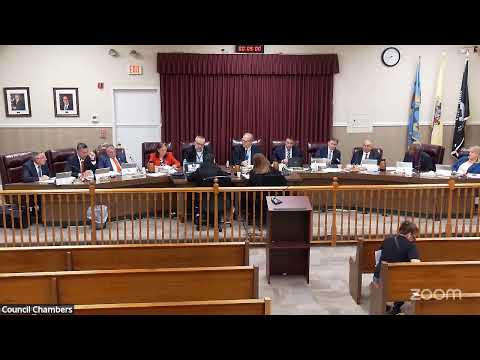
Sayreville council adopts housekeeping salary ordinance after heated debate; Novak objects
Summary
Council adopted Ordinance 9-26 to restore a position removed by a clerical error, but Councilwoman Novak voted no and pushed for clearer step progression between minimum and maximum pay ranges; mayor and others said the change is a routine restoration needed to legally authorize pay.
Sayreville Mayor Kennedy O’Brien and the borough council adopted Ordinance 9-26 on second reading May 11, 2026, restoring a municipal position that staff say was omitted from the salary ordinance by clerical error. The vote followed an extended council exchange over how the ordinance sets minimum and maximum salary ranges for the position.
Councilwoman Novak told colleagues she would vote against the ordinance. “I still have so many questions on this. I’m going to be voting no on it,” she said, arguing that ordinances which list only a minimum and maximum without explicit step progression can leave long-tenured employees unable to reach top pay. Novak said the council should set clearer advancement steps rather than rely on administrative adjustments.
Mayor Kennedy O’Brien and other council members described the measure as a housekeeping correction that restores a previously existing position and the legal salary range for that post. The mayor noted the position had existed prior to the clerical omission and that, without the ordinance, the borough lacks the legal authorization to pay the incumbent. A municipal attorney explained that New Jersey municipalities routinely set minimum and maximum ranges in ordinance and then use administrative or resolution-level action to assign salaries within those ranges so that routine increases do not require another ordinance.
After debate the council moved to close the public hearing and adopt the ordinance on second and final reading. The roll-call vote recorded mixed support; Novak voted no. Council members who supported the ordinance described it as necessary to restore the payroll authorization; opponents and dissenting members raised broader concerns about the transparency and mechanics of movement from minimum to maximum pay.
The council did not change the ordinance language at the meeting. Novak asked that the administration and finance committee examine alternatives for clearer step progression in future salary ordinances. The administration agreed to take the concern under advisement and to return with clarification or possible revisions at a later meeting.