Get Full Government Meeting Transcripts, Videos, & Alerts Forever!
Get email alerts on the Go Student Fostering Independence topic
No spam. Unsubscribe anytime.
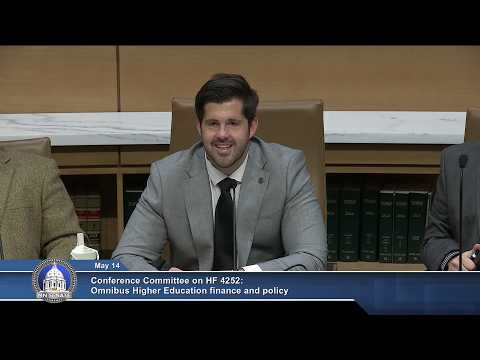
Conferees hear late-breaking Fostering Independence shortfall and debate $1.5M GO Student identity-verification request
Summary
The Office of Higher Education disclosed a roughly $570,000 shortfall in Fostering Independence grants for summer term; Minnesota State requested about $1.5 million per year for a GO Student identity verification system and conferees debated one-time, two-year or ongoing funding and staffing runway.
Committee members received two late but related fiscal items: a shortfall in the Fostering Independence grant program and a funding request from Minnesota State to buy and operate an identity-verification system (branded in testimony as ‘GO Student’) to combat enrollment fraud.
Commissioner Dennis Olsen said reconciliation of spring disbursements showed a roughly $570,000 shortfall in the current appropriation to cover summer-term payments for the Fostering Independence grant program, which pays eligible students up to total cost of attendance: "After reconciliation of spring payments…we discovered there's about a $570,000 shortfall," Olsen said. He said about $170,000 remained available in the appropriation but much of that was already committed to spring payments.
Craig Months, chief information security officer at Minnesota State, described the GO Student proposal: a commercial software solution plus staff to implement and maintain automated checks to detect enrollment fraud. Months said the system would cost roughly $1.5 million per year at current vendor rates and the system would also require hiring staff to configure and maintain it.
Conferees discussed funding structure: some members said leadership budget agreements had limited one-time funds and asked whether a two-year runway would be adequate to launch and evaluate the system instead of committing to ongoing baseline funding immediately. Minnesota State asked for at least one to two years of sustained funding to hire staff and to make the implementation feasible.
What’s next: conferees flagged the shortfall as a priority to address for summer students and agreed to continue bargaining over GO Student funding — including whether to treat it as a one-time, multi-year, or ongoing appropriation — when the committee reconvenes.