Get Full Government Meeting Transcripts, Videos, & Alerts Forever!
Get email alerts on the Higher Education Attainment topic
No spam. Unsubscribe anytime.
Conferees consider raising Minnesota higher-education attainment goal to 75% and broaden metrics
Summary
A legislative conference committee debated Senate language that would extend and raise Minnesota's higher-education attainment target from 70% to 75%, expand the measured age range and narrow metrics; the Office of Higher Education said no new appropriation was requested and recommended technical metric changes.
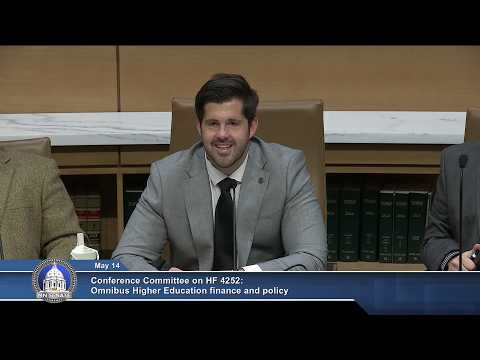
A conference committee on higher education on Monday discussed a Senate proposal to extend and change Minnesota’s higher-education attainment goal, raising an aspirational target from 70% to 75% and expanding the age range used to measure attainment.
Commissioner Dennis Olsen of the Minnesota Office of Higher Education told conferees the 2015 goal (70% of adults with a postsecondary credential by 2025) had expired and the Senate-only language seeks to extend and redesign that target. "Previously our goal that was set by the Legislature in 2015…was 70% of Minnesotans age 25 to 44 retaining some sort of postsecondary credential beyond high school," Olsen said. The proposed bill would broaden that age range (down to 24 and up to 55) and bring additional agencies and partners, including the Minnesota P-20 Partnership, into the reporting and metric design work.
Why it matters: conferees said they want a single, renewed statewide target to guide policy and programming, but members pressed for clarity on feasibility and cost. Representative Eric (as recorded in committee) noted that Minnesota’s most recent reported overall rate was about 63.5%, and asked whether 75% was realistic. Olsen replied that the language narrows some previously broad metrics and would coordinate with the state demographer and P-20 partners to improve measurement and regional disaggregation.
Key details: Olsen described several technical changes in the Senate proposal: narrowing which credentials count, expanding metrics to include indicators from K–12 and early childhood, disaggregation by region and gender, and updated reporting responsibilities. He told the committee the bill does not request additional appropriations to implement the reporting changes in the draft under consideration: "There's no additional funds requested through the bill…so essentially continuing work that we already do," Olsen said.
What’s next: conferees debated the policy’s ambition and measurement, with several members urging more time to review data. The committee agreed to continue discussion and consider amendments the next day on items where the two chambers differ.
The committee did not enact a final decision on the attainment target during this meeting; members scheduled further review at the next session.