Get Full Government Meeting Transcripts, Videos, & Alerts Forever!
Get email alerts on the Agriculture topic
No spam. Unsubscribe anytime.
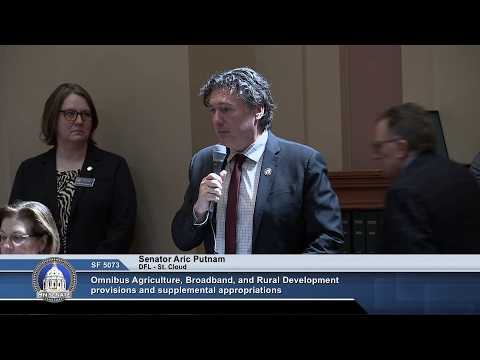
Minnesota Senate passes omnibus agriculture bill after blocking paraquat ban amendment
Summary
The Minnesota Senate on May 14, 2026, passed Senate File 5073, a package of agriculture policy and finance changes, 55–10. Lawmakers adopted an A-18 policy amendment but a separate A-19 proposal to restrict paraquat was ruled out of order on a Rule 7.4 point of order tied to fiscal impacts.
The Minnesota Senate passed Senate File 5073, an agriculture policy and finance bill, on Thursday, May 14, 2026, by a roll-call vote of 55 yeas to 10 nays.
The bill, presented by Sen. Mark Putnam, includes provisions addressing seed-potato regulation, changes to a down-payment assistance program aimed at helping new and beginning farmers buy land, a "train and retain" workforce initiative to support meat-processing employers, and a farmer-lender mediation program to help struggling farmers negotiate with lenders. Sen. Putnam said the package was intended to help a broad range of farmers across the state.
Senate colleagues adopted the A-18 amendment offered by Sen. Westrom to incorporate additional agricultural policy language passed earlier on the floor. During debate, Sen. Hoffman offered an A-19 amendment that would have added language to prohibit or restrict the sale and use of paraquat, a herbicide he described as "a highly toxic chemical" and linked to research on Parkinson's disease. "Paraquat is a highly toxic chemical and it's banned in over 70 countries," Sen. Hoffman said. He urged members to act to protect public health.
Supporters of a ban and opponents acknowledged the chemical's toxicity but differed on the timing and fiscal and regulatory consequences of an outright prohibition. Sen. Putnam said he "appreciate[d] the passion and conviction" on the issue and supported further discussion but emphasized that the bill already includes a study of paraquat use and noted the complexity of agricultural impacts. Sen. Rasmusson raised a point of order under Rule 7.4, arguing the A-19 amendment would impose fiscal impacts noted in a fiscal note (including lost surcharge revenue and agency enforcement costs) and therefore ran afoul of the rule's protection for omnibus appropriation measures. After debate, the presiding officer found the point of order well taken and ruled the A-19 amendment out of order.
The bill moved to third reading and final passage later the same day. The secretary reported 55 yeas and 10 nays. The presiding officer announced the bill passed and its title was agreed to. The Senate then recessed to the call of the president.
What happened next: with final passage secured, the bill will be enrolled according to chamber rules and transmitted for any further steps required by the legislative process.