Get Full Government Meeting Transcripts, Videos, & Alerts Forever!
Get email alerts on the Sidewalk Ordinance topic
No spam. Unsubscribe anytime.
Advisory committee delays recommendation on Bangor sidewalk ordinance after public debate
Summary
After hours of testimony from library staff, downtown stakeholders and residents, the Advisory Committee on Racial Equity, Inclusion and Human Rights voted to hold a May 6 special meeting to draft clearer language on a proposed sidewalk-ordinance change that would expand a construction-only rule to cover materials on sidewalks.
The Advisory Committee on Racial Equity, Inclusion and Human Rights paused action on a proposed amendment to Bangor's sidewalks ordinance on April 28 after lengthy public comment and a legal briefing on enforcement.
City Manager Lear told the committee the issue began last fall with concentrated complaints around Cedar and First streets about people and their belongings occupying sidewalks. He said the police had asked for clearer ordinance language to make enforcement possible, and the council asked the committee to advise on where to set a community standard for sidewalk accessibility.
The committee heard from Ben Tri, director of the Bangor Public Library, who said sidewalks and the library are public spaces with distinct purposes. “Housed people and unhoused people are all people, right?” Tri said, describing patrons who have been deterred from entering the library and a nighttime encampment directly outside the building. Tri said the library maintains a greeter and a social-worker position to de‑escalate interactions and connect visitors to services.
A range of residents and stakeholders urged divergent responses. Downtown stakeholders emphasized longstanding work to keep sidewalks passable for pedestrians and tourists; one presenter said the city’s walkability goals and tour operators depend on unobstructed sidewalks. Public commenter Katie Co, a Bangor resident, warned that “further criminalization is, I think, a terrible step,” saying civil fines would compound poverty, could lead to incarceration for unpaid fines and that the city should identify safe places for people to be.
City solicitor David Sek outlined two drafting options for the committee to consider: remove the phrase “for construction purposes” from existing Section 257‑4 to broaden its scope, or adopt a standalone Section 257‑7 that would specifically prohibit occupying sidewalks to store materials while enumerating exemptions and enforcement procedures. Sek described the envisioned enforcement approach as police or code-enforcement officers first directing individuals to move materials; if individuals refuse and can be identified, the draft calls for civil penalties of $50–$100 for a first offense and $100–$250 for a second offense within six months. If the responsible person cannot be identified, municipal policies for removal of materials would apply.
Committee members and speakers repeatedly urged clearer, enforceable definitions and procedural safeguards: what counts as “materials” or “property,” how much clear width must remain for ADA-compliant passage (committee members noted a 36‑inch minimum for passability), what happens to belongings that are removed, and whether fines are an appropriate tool before housing or storage alternatives exist.
Multiple members said the ordinance text as proposed was ambiguous and risked penalizing people without creating safe alternatives. Others said the city already has loitering provisions in chapter 174 and questioned whether the council should revisit that section rather than repurpose a construction‑oriented provision.
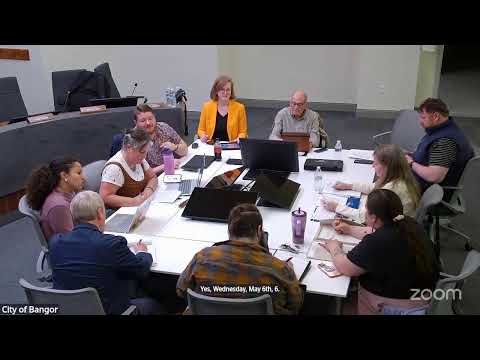
Rather than issue an immediate recommendation, the committee voted unanimously to schedule a special follow-up meeting to draft specific amendments and supporting materials (including ADA references and storage/possession policy language). The committee set that meeting for Wednesday, May 6 at 6:00 p.m. in the Paul Bunyan room; staff agreed to compile the statutory text, ADA guidance and the city’s storage/disposal policy for the drafting session.
Procedural notes: the committee approved its March 24, 2026 minutes at the start of the meeting after correcting two name spellings. The committee’s next task on this referral is to return to council with a recommendation (or note that it has no recommendation) before the council's next reading.
The committee adjourned after scheduling the May 6 follow-up meeting.