Get Full Government Meeting Transcripts, Videos, & Alerts Forever!
Get email alerts on the Referendum topic
No spam. Unsubscribe anytime.
Lodi survey shows majority support to renew operations, favors non‑recurring funding; CTE tops building priorities
Summary
A School Perceptions survey presented to the Lodi School District board found 1,029 responses (±3% margin) and majority support for maintaining current operational funding when weighted; respondents favored non‑recurring referendum language, prioritized CTE facilities, and showed lukewarm support for a $15 million building package with higher amounts broadly unsupported.
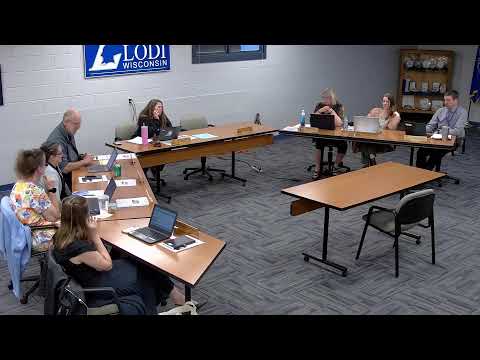
The Lodi School District board received detailed community-survey results on May 11 from School Perceptions vice president Ron Dies showing broad, but cautious, community backing for district spending measures needed to replace expiring referendum revenue.
School Perceptions reported 1,029 responses — an above-average turnout that produced a margin of error of about ±3%. "You outdid yourself relative to last time," Ron Dies told the board as he reviewed demographics and response rates. He said weighted results indicate roughly two-thirds support for maintaining current operational funding levels, once the different sizes of staff, parents and other community voters are accounted for.
Why it matters: the board is considering whether to place one or more questions on a possible November 2026 ballot. Dies said respondents prefer a non‑recurring (expiring) funding option to a permanent levy increase, and that a $15 million capital package would be about a 50/50 proposition "within the margin of error," while a full $33.3 million package drew only minimal support.
Survey takeaways and specifics
- Respondent pool: 1,029 total responses; margin of error reported as ±3%. - Operational funding: majority support across key subgroups when weighted for likely November turnout; Dies said staff support was especially strong on operational questions. - Funding structure: all three key respondent groups (staff, parents, and non‑parent community members) favored non‑recurring (expiring) revenue structures over permanent increases. - Staff compensation: the survey asked about an additional $675,000 per year to increase support‑staff pay; the question was titled "additional funding" and the board later reviewed the exact mailed wording showing that the $675,000 figure was presented as an amount in addition to the district's replacement funding level. - Facilities priorities: Career and Technical Education (CTE) ranked first among proposed projects, with indoor/outdoor athletics and a performing-arts center trailing; support for any capital package declined steadily as the total price increased. - Tax tolerance: weighted results put a $15 million capital referendum near the board’s target range but too close to call; amounts materially higher than $15 million have substantially less community support.
Board responses and next steps
Board members pressed for clarity about survey wording and cost framing. "I don't see any way, shape, or form that the community is going to support that amount," Board member Scott said of the $33 million package, urging that the board prioritize and pare back proposals. The board also asked staff to produce options that fit within the community's stated tax tolerances and priority list.
The administration said the full survey results and respondent comments will be posted on the district website and will inform draft referendum options. The board scheduled follow-up work and a special meeting to begin deliberate planning on referendum components.
What the board will decide next
Officials emphasized the presentation provided information, not an immediate decision. The district will use the survey findings and comment data to develop referendum scenarios for further board deliberation; the board also flagged the need to resolve whether any staff‑compensation ask would be additive to the current replacement levy when the board designs ballot language.
Reporting note: survey methodology and the exact question wording — including the explicit mill‑rate impact language for the $675,000 staff item — were shown to the board during the meeting and will be posted publicly with the full survey report.