Get Full Government Meeting Transcripts, Videos, & Alerts Forever!
Get email alerts on the Public Safety topic
No spam. Unsubscribe anytime.
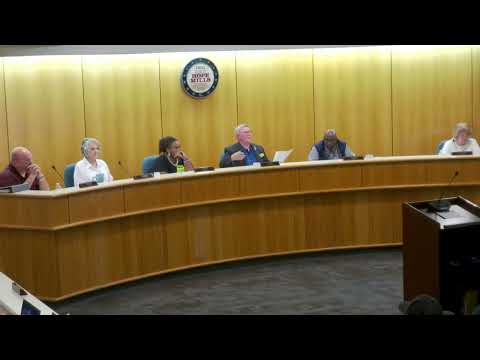
Hope Mills budget workshop highlights public-safety staffing shortfalls and pay-study funding gap
Summary
Council members debated frozen fire and police positions, pay-study shortfalls and whether to use incremental property-tax increases to close a projected multi-million-dollar gap; police and fire chiefs warned that not refilling positions risks service levels and could prompt departures to neighboring agencies.
At a May 11 workshop, Hope Mills council members spent the bulk of a long public-safety discussion weighing staffing gaps, a multi-year pay study and options for closing a projected operating shortfall.
Commissioner Brian Marley pressed the board on a fire-department position that has been frozen "seven years," noting the department's minimum staffing needs and connecting the frozen slot to recurring overtime costs. "The amount of general fund support required to unfreeze the position would be $67,131 effective July 1 and approximately $33,564 effective Jan. 1," he said, reading staff estimates into the record.
Police leadership told the board that frozen police vacancies and competing offers from neighboring Fayetteville and other agencies put the town at risk of losing officers. The police chief said specialized task-force officers generate significant asset-forfeiture proceeds for the town and warned that losing them would erode both public safety and a local revenue stream. "Last year alone our task force officers seized over $2,274,489," the chief said, adding that federal and state asset-forfeiture shares can support equipment purchases but cannot be used to pay salaries.
Board members debated options for revenue and cost control. The outgoing finance director's memo read into the record recommended a 6-cent tax increase as one path toward full pay-study implementation; staff later said a single penny of property tax is roughly $200,000 in recurring revenue. Commissioners expressed reluctance to approve a large tax increase immediately but signaled willingness to consider smaller, incremental adjustments tied to a plan for completing the pay study.
Why it matters: Council members characterized public safety as a "north star" for the town and said prolonged underfunding or position freezes could degrade emergency response, increase overtime, and complicate recruitment and retention at a time of rapid local growth.
What comes next: Staff will return with more precise options and the board requested financial scenarios to show the cost of unfreezing positions, phased pay-study funding and tax-rate impacts before any formal vote. The board also discussed scheduling a public hearing in June if timing and notice rules permit.