Get Full Government Meeting Transcripts, Videos, & Alerts Forever!
Get email alerts on the Gun Violence Prevention topic
No spam. Unsubscribe anytime.
House rejects urgency motion to take up comprehensive gun package after hours of debate
Summary
After hours of floor debate and emotional testimony, the Minnesota House failed to declare urgency to consider a comprehensive gun violence prevention package (motion failed 67-67). Sponsors said the package would ban certain "weapons of war," restrict ghost guns and binary triggers and expand prevention measures; opponents raised concerns about drafting, penalties and unintended criminalization of lawful owners.
The Minnesota House on May 14 failed to declare an urgency to take up a comprehensive gun violence prevention and child safety package, rejecting a motion to suspend the rules after an hours-long floor debate and a roll call that ended in a 67-67 tie.
Representative Long moved the suspension to recall House File 51 40 and pressed for an immediate vote, saying Minnesotans want action after the August school shooting in which children were killed and wounded. Representative Green, the bill's floor sponsor, framed the package as a multipronged response that would "prevent, intervene and reduce the harm of gun violence," and urged colleagues to "move our feet" rather than defer action.
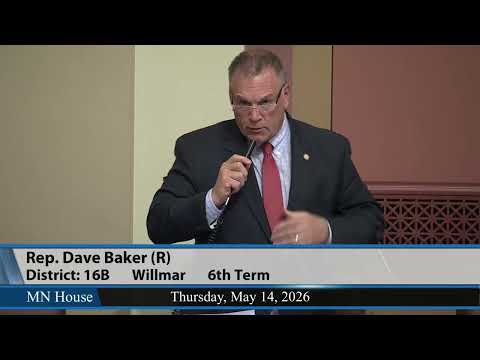
Opponents repeatedly pressed the bill author on drafting details. Representative Heintzeman warned that "this bill as written would make every handgun in the state illegal" if certain features were read broadly, and asked whether ordinary handgun grips or routine cleaning could be captured by the language. Heintzeman also focused on the penalties, asking whether failure to certify an item could turn otherwise law-abiding owners into felons. Representative Green said she would accept amendments to clarify intent, including specifying that a banned feature is an "additional" protruding grip rather than the ordinary handgun grip.
Other Republican members raised constitutional and enforcement concerns, arguing the bill created unfunded requirements for background checks and could disarm security teams at private schools; proponents disputed those claims and cited evidence the package contains prevention, anonymous threat reporting and mental-health investments alongside restrictions on devices such as binary triggers and ghost guns.
Floor debate included extended personal testimony and accounts from colleagues and constituents about the effects of gun violence in Minnesota schools, workplaces and homes. Several members described treating or grieving victims and pressed for action. Representative Green asked members to recall three sounds from the Annunciation shooting: "the sound of two full minutes of gunfire," the "heartbreaking grief" that followed, and the sound of survivors singing together.
Following the roll call the clerk announced the motion did not prevail. After the failed vote DFL leaders announced they would remain on the House floor in protest, urging the Speaker to bring the Senate-passed package up for consideration.
What happened next: the motion to suspend the rules and declare urgency failed on a tie (67-67). House Democratic leaders said they would remain on the floor in a sit-in until Speaker action on the Senate-passed bill. No further floor action on the package was recorded that day.
Notes: The floor debate focused heavily on drafting precision (the statutory definitions of prohibited features), enforcement mechanics (background checks, certification and who enforces), and penalties (gross misdemeanor vs felony exposure for successive violations). Proponents emphasized the bill is comprehensive, pairing restrictions with prevention and healing resources.