Get Full Government Meeting Transcripts, Videos, & Alerts Forever!
Get email alerts on the Budget Fy2027 topic
No spam. Unsubscribe anytime.
Santa Fe County’s FY2027 interim budget emphasizes pay, public safety and asset renewal, manager says
Summary
County Manager Greg Schaefer presented a proposed FY2027 interim operating budget that relies on mean revenue forecasts, funds cost-of-living adjustments and targeted public-safety hires, sets aside contingencies and proposes earmarking surplus investment income for a fixed-asset renewal fund. Commissioners requested a clearer top-line revenue rollup.
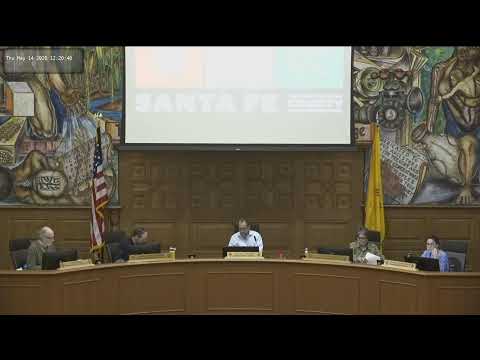
County Manager Greg Schaefer opened Santa Fe County’s special Board of County Commissioners budget session on May 14, presenting a proposed FY2027 interim operating budget built on a conservative approach to revenue and new investments in county staff and public safety.
Schaefer said the administration used economic forecasts from Dr. Riley White and “build[s] the recurring budget based upon the mean estimate,” while reserving a revenue-replacement contingency equal to the gap between the mean and low forecasts to hedge downside risk. He told commissioners the county assumes recurring salary savings of roughly 10 percent (about $12 million in FY27) and treats realized investment income conservatively because it is volatile.
The proposed operating budget fronts several personnel investments. Schaefer said it includes funding for a January 2027 cost-of-living adjustment for many non‑bargaining and covered pay groups (an annualized estimate of about $2.5 million) and provides budgeted amounts to support ongoing collective‑bargaining negotiations. The proposal also includes funding for five additional deputy sheriff positions (described as an initial installment toward a larger staffing study recommendation) and nine firefighter/EMT slots that translate into one additional position at three stations to maintain 24/7 coverage.
Schaefer outlined health and workforce cost pressures the county is budgeting for, including an estimated 16.3 percent increase in group-health contribution rates that he said would translate to roughly $2.1 million on the employer side. He also called attention to an expected increase in liability and property insurance costs driven by national and local liability trends.
On behavioral-health and corrections, the manager proposed using some newly freed debt capacity from a maturing bond to support operations and capital needs. Schaefer said bonds for the adult detention facility will mature and that the budget presumes $1.75 million of that freed capacity would be applied to debt service for a future revenue bond to fund a minimum $30 million renovation and expansion of the facility to add medical and behavioral‑health treatment and re‑entry space.
To address recurring and future capital needs more broadly, the manager recommended earmarking surplus investment income above a conservative recurring baseline into an asset-renewal and replacement fund and suggested a five‑year funding target (staff offered a broad range of roughly $15–20 million over five years as an initial benchmark).
Other items in the operating budget include two additional county opioid outreach/mobile integrated health specialists to expand mobile integrated health teams from one to three, a youth behavioral‑health program manager to oversee center development and service contracts, and non‑recurring funding ($400,000) to advance work toward becoming a Medicaid service provider as a revenue‑diversification strategy.
Commissioners pressed staff for clearer, consolidated revenue rollups. Commissioner Kakari Stone said she wants a single table showing total FY27 revenue (by source and by low/mean/high scenarios) and how recurring and non‑recurring revenues match projected expenditures; Ivonne (finance) responded that fund‑level detail is in the budget book and agreed to prepare a clearer high‑level rollup for the board.
Schaefer closed by noting deadlines and next steps: two budget study sessions scheduled for May 19–20, a potential May 26 meeting to approve an interim budget (the Department of Finance and Administration interim filing deadline is June 1), and a final budget filing deadline of July 31, 2026.
The board did not take final action on the interim budget in this session; commissioners scheduled follow‑up study sessions and asked staff to return with clarified revenue rollups and requested materials.