Get Full Government Meeting Transcripts, Videos, & Alerts Forever!
Get email alerts on the Budget FY26 topic
No spam. Unsubscribe anytime.
Upper Adams staff preview FY26 budget: revenue strength but a near‑term $2 million gap
Summary
District business staff told the committee that FY26 preliminaries show roughly $36 million in anticipated revenue and about $38 million in expenditures, creating a projected roughly $2 million variance; staff described planned fund‑balance strategies and scheduled final adoption for mid‑June.
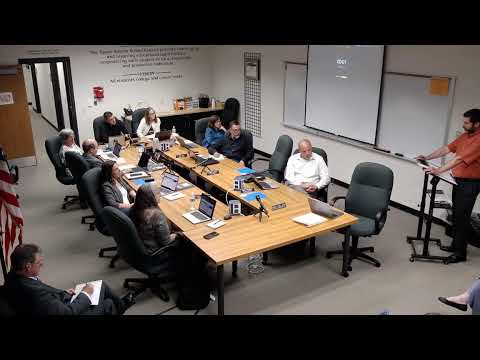
Mrs. Hobbs, the district’s budget lead, presented a preliminary look at fiscal year 2026 finances, telling the Curriculum and Extracurricular Committee that current best estimates show about $36 million in revenue and about $38 million in proposed expenditures — a projected variance near $2 million that the district expects to cover with a mix of assigned and unassigned fund balances if additional state funds do not arrive.
Hobbs said FY25 revenues have been "strong" across local, state and federal categories and that the district expects to add roughly $180,000 to fund balance for FY25. Looking ahead to FY26, she noted variability in state allocations and called several projected state increases "best case" estimates that were not yet factored into the preliminary budget. In particular she cited a homestead/farmstead change that increased state funding estimates by about $180,000 and suggested that the typical taxpayer might see an offset of roughly $40 on average property tax bills when the homestead farmstead relief is applied.
On expenditures, Hobbs outlined a set of proposed program costs built into the preliminary budget: summer enrichment transportation, translators for family conferences, converting a contracted speech-language pathologist to district staff, additional assistant coaches and security investments such as a combined Raptor check‑in and emergency-management system. Those items are included in the preliminary figures and were discussed as part of the district’s June adoption timeline.
Hobbs walked the committee through worst- and best-case scenarios tied to pending state funding. If anticipated state increases do not materialize, the district will draw from a combination of assigned funds (debt/service reserves, technology, etc.) and the unassigned fund balance to close the gap. She said the board will receive another budget presentation by early June and is scheduled to adopt the final budget on June 17.
No final vote on the preliminary budget occurred in committee; Hobbs asked the board whether any of the new asks (about $85,000 in new items shown in the packet) should be pulled or revised for the final adoption process.
Next steps: staff will provide another budget presentation in early June, present the Homestead/Farmstead resolution for approval and bring the final budget to the board for adoption on June 17.