Get Full Government Meeting Transcripts, Videos, & Alerts Forever!
Get email alerts on the Audit Internal Controls topic
No spam. Unsubscribe anytime.
Audit finds control gaps, $2.7 million insurance journal entry and millage mismatches in Oconee County budget review
Summary
County auditors gave Oconee County a clean opinion on its FY2025 financial statements but identified four significant deficiencies — including weak bank-reconciliation review, unapproved budget amendments entered into the ERP, missing support for journal entries (notably a $2.7M health-insurance entry), and problems reconciling millage moves — prompting council requests for audit trails and follow-up.
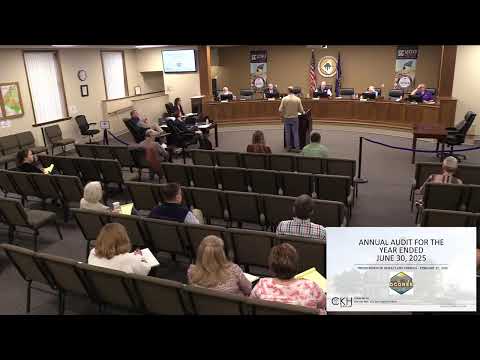
Auditors from CKH told the Oconee County Budget Finance Administration Committee at a Feb. 27, 2026 workshop that their audit of the fiscal year ending June 30, 2025 produced an unmodified opinion on the basic financial statements but uncovered multiple internal-control problems that deserve prompt correction.
The auditors said they identified four significant deficiencies but no material weaknesses. Key findings included flawed review processes for bank reconciliations, budget amendments that were imported into the county’s CSI ERP without council approval, and weak journal-entry controls and support — including a $2.7 million journal entry tied to the county’s transition to a self‑funded health‑insurance plan for which documentation was incomplete or missing.
The auditors described the impact on the general fund. They said that reclassifying portions of property‑tax millage into three newly created funds (community health & human services; fire and emergency capital; capital request) had not been consistently matched by moving the related expenses or by adjusting millage calculations, creating a roughly $5.9 million discrepancy between revenue assumptions and budgeted needs. The auditors’ analysis also showed declining available (unassigned) fund balance across recent years, which they warned could require corrective action to avoid compliance and liquidity pressures.
In response, councilors asked auditors to provide the audit trail and dates for the large $2.7 million journal entry and for the unapproved budget amendment the auditors flagged (about $1.6 million) so the county can trace when those items were posted to CSI. County leadership said staff will provide additional documentation. County officials also said they have already begun provider changes and other measures intended to reduce health‑insurance costs and that reconciliations to bank statements are underway (a process estimated to take roughly six weeks to complete back to July 2025).
Auditors recommended concrete next steps: stronger, documented procedures for bank reconciliations and month‑end close; a second‑person review of journal entries and attached support; implementing a continuity plan and succession training for finance staff; strengthening the budget‑approval process and formal controls around importing amendments into the ERP; and upgrading or better utilizing financial software (the auditors noted CSI is dated and suggested migrating to a modern ERP and better fixed‑asset and debt modules).
The county’s finance leadership and auditors agreed to supply additional, traceable evidence on the flagged journal entries, and council members pressed for a clear schedule of follow‑up work and interim controls so elected members can make informed decisions during the FY26–27 budget process.
Council next steps: auditors will provide the dates and system audit trail for the $2.7M journal entry and the $1.6M unapproved import; staff will complete reconciliations to bank statements within the six‑week timetable they outlined; and administration will bring back proposed policy changes for ERP imports and signoffs.
The committee kept the emphasis on repair rather than blame: the audit provides a road map for procedural fixes and technology improvements that county leaders said they will pursue while finalizing the upcoming budget.