Get Full Government Meeting Transcripts, Videos, & Alerts Forever!
Get email alerts on the Public Art Management topic
No spam. Unsubscribe anytime.
Commission reviews public-art plaque inventory; staff to prioritize unmarked works and explore QR-code signage
Summary
An ad hoc committee presented a citywide inventory and condition ratings for public-art plaques, recommending prioritizing artworks without plaques and using low-cost QR-code interpretive signs linked to a public-art map; staff said $5,000 is budgeted for short-term work with a June 30 spending timeline.
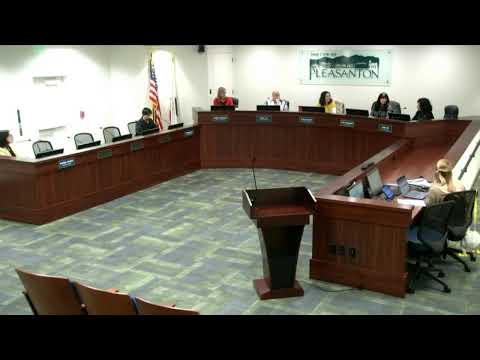
The Pleasanton Civic Arts Commission on April 7 reviewed the findings of a public-art plaque ad hoc committee that inventoried plaques, photographed conditions and rated them on a 1–4 scale (1 = poor, 4 = excellent). The committee found some artworks lack any signage, five plaques are in poor condition and several others need repair or improved interpretive text.
Staff outlined a short-term, $5,000 project scoped at approximately six months with about 40 hours of staff time to prioritize plaque replacements or to install alternative interpretive signage such as small, ground-mounted signs with QR codes linking to a forthcoming public-art map. "Since these funds are budgeted for this fiscal year which ends June 30th, staff have already begun gathering quotes for some of these ideas," a staff member said.
Commissioners discussed specific works flagged in the inventory, including outdoor pieces such as the Yak, Sylvester and other outdoor plaques that are difficult to read; commissioners noted some plaques were embedded in concrete or had been removed (Ryan’s Bench/Ryan Stones). Several commissioners supported leaving historical plaques in place where they are part of the artwork and adding a replaceable QR-code sign nearby to provide readable interpretive text and correct any attribution errors in the plaque text.
The ad hoc committee also recommended consulting directly with stakeholders in sensitive locations, noting the Veterans Memorial could require consultation with veterans groups before making alterations. Commissioners raised accessibility and ADA-compliance concerns for web content and noted federal guidance requiring that public-agency web content be accessible; staff said they are working on the map and photo inventory and will share progress with the commission.
Staff asked commissioners for prioritization guidance; the commission expressed consensus around first addressing artworks that lack any signage and then evaluating the poorest-condition plaques depending on quotes and installation costs. Staff will return with cost estimates and a prioritized list to guide use of the $5,000 short-term allocation.