Get Full Government Meeting Transcripts, Videos, & Alerts Forever!
Get email alerts on the Community Meals topic
No spam. Unsubscribe anytime.
Riverside Local discusses expanding free school meals under Community Eligibility Provision
Summary
District staff reviewed options to enroll some buildings in the federal Community Eligibility Provision (CEP), presenting reimbursement scenarios, four-year certification implications, and likely effects on Title and DPIA funding.
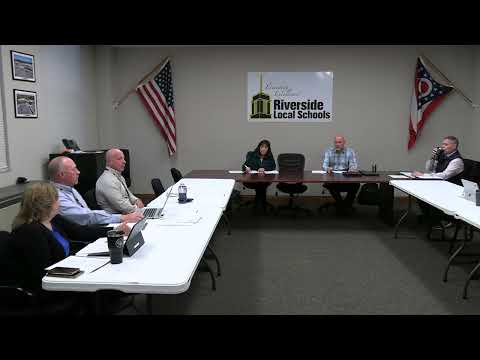
District staff and board members spent the bulk of the meeting weighing how to use the federal Community Eligibility Provision to provide free meals for students in qualifying buildings.
Michelle Gford, who said she manages Fairport's food service program and joined the meeting to brief the board, explained CEP and current eligibility. "C is community eligibility provision which means all students in a district or building can eat at no cost breakfast and lunch," she said, and noted the federal threshold that triggered a recent rule change had dropped from 40% to 25%. She reported building-by-building shares in the district: Mel Ridge at 44% and Riverview at 33%, while Lamouth sits at 26% and Buckeye at roughly 24%.
Gford walked the board through reimbursement scenarios the district would face. If the district grouped all buildings, she said the blended reimbursement would be about 61.45% at the free rate and 38.55% at the paid rate. "If we did them separate, Fairport would be a lot higher, 66.13 and 33.87," she said; combining Mel Ridge and Riverview, she added, could push the district mix to about 58.38% free and 41.62% paid. Gford also explained CEP operates on a four-year certification cycle, which can lock building counts in place and create short-run mismatches as students shift between buildings.
Board members pressed logistical questions: whether a single building could be added midcycle, how closure and redistricting affect counts and transfers, and how parental reaction might play out if some schools receive free meals while others do not. Staff said communication would be critical and that families who still qualify through applications would continue to receive related fee waivers and services.
Gford emphasized the funding case for CEP beyond meal service: certified buildings typically attract higher Title and DPIA funding. She cited other districts' experience when switching to CEP and said even two qualifying buildings could meaningfully increase federal aid that indirectly supports the general fund.
The board did not take a vote at the meeting. Staff indicated they would continue modeling financial outcomes and return with a formal recommendation and the operational details the board requested.