Get Full Government Meeting Transcripts, Videos, & Alerts Forever!
Get email alerts on the Land Use topic
No spam. Unsubscribe anytime.
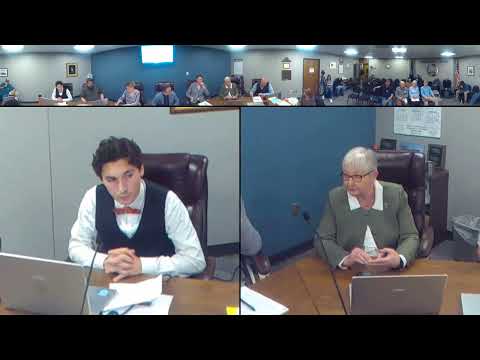
Lengthy public comment on K Junction solar project; York commissioners set multiple setback rules and restrict large battery storage
Summary
After hours of public testimony, York County commissioners voted on a package of setback rules for industrial solar and restrictions on battery energy storage systems; they also scheduled a joint public hearing with Planning & Zoning on April 27 to gather further input.
A prolonged public-comment period and several hours of debate over industrial solar land use dominated the York County Board of Commissioners’ April 14 meeting. Residents urged the board to adopt wide setbacks around nonparticipating homes, raised concerns about panel damage, toxic materials and fire risks from battery storage, and warned the project would convert prime farmland. Supporters of setbacks included local farmers, students and the zoning commission’s recommendations; OPD representatives and some participants said leases help keep family land in farm ownership.
Commission debate focused on how far setback buffers should extend from nonparticipating dwellings, participating properties, schools, churches, cemeteries and state recreation areas. The board took a series of votes during the discussion, producing a mixed set of outcomes and recorded tallies. Commissioners also voted to prohibit larger battery energy storage systems on higher‑impact (Class 3 and Class 4) installations while allowing smaller, enclosed systems with administrative approvals on lower‑impact projects; the board required BESS installations to register with local authorities and to use closed‑loop or HVAC cooling systems.
Key public claims included that industrial solar can create localized heat islands that reduce crop yields, that hail and tornado damage could scatter panel shards and hazardous materials, and that battery storage presents fire and water‑suppression challenges. OPD representative Kale Geese said developers have met with participating landowners and that some landowners view leasing as a way to retain family property. County Attorney Chris Johnson (speaking as a citizen) reminded the board that whatever setback rules it adopts will set county‑wide precedent.
Several discrete votes and procedural moves were taken during the meeting. Notable outcomes recorded on the transcript include: approval of administrative and conditional‑use pathways for smaller projects; board adoption of a set of setbacks by category (votes recorded in the transcript with commissioners’ roll‑call positions); adoption of battery‑storage limits that allow modest, enclosed systems for lower‑impact projects but prohibit large BESS fields on high‑impact industrial sites. Because the discussion produced multiple motions and amendments, the board scheduled a joint public hearing with the Planning & Zoning Commission for 7:00 p.m. Monday, April 27 at the courthouse to receive a consolidated public record and offer the planning board the opportunity to comment before the board votes on a final resolution.
What the board did not do at this meeting was adopt a final codified zoning resolution; commissioners asked staff and the planning consultant to clean up the draft regulatory text and agreed to pursue a public‑hearing process with opportunity for additional written and oral comment. Commissioners and staff repeatedly emphasized that some technical items in the draft (screening language, erosion control, inverter siting, and decommissioning plans) will be clarified before a final adoption vote.
Next steps: the joint public hearing is set for April 27 at 7:00 p.m. at the York County courthouse; the board expects to take final action following that hearing after staff and the planning commission supply any recommended edits to the draft regulations.