Get Full Government Meeting Transcripts, Videos, & Alerts Forever!
Get email alerts on the Housing Policy topic
No spam. Unsubscribe anytime.
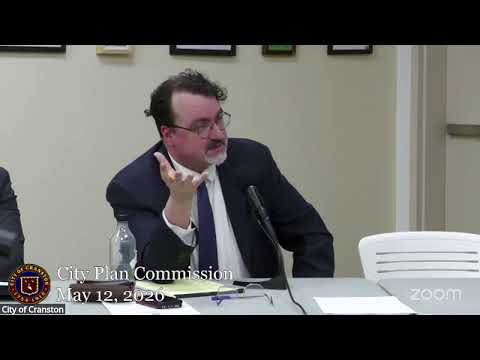
Cranston planners debate housing element: inclusionary zoning and Elmwood Avenue rezoning highlighted
Summary
City planning staff presented draft housing element goals and policy options to meet state targets (1,367 units by 2030, and a 20‑year goal to achieve 10% low/mod income housing), with staff advocating inclusionary zoning, mixed‑use centers (notably Elmwood Avenue), and neighborhood‑consistent zoning while commissioners urged caution on population projections, phasing, and neighborhood impacts.
The Cranston City Plan Commission spent the bulk of its meeting reviewing a draft housing element of the comprehensive plan, focusing on how to meet the state's Housing 2030 target of enabling approval of 1,367 new units by 2030 (including about 205 guaranteed low and moderate income units) and a 20‑year comprehensive plan objective to reach 10% low and moderate income housing across the city’s housing stock.
Director Ashman framed the discussion as an effort to present policy options staff thinks can be shown to statewide planning as likely to deliver the required unit yields. He told commissioners the housing element must show concrete policy actions rather than vague goals, and identified inclusionary zoning and a mixed‑use centers and corridors program (including Broad Street, Rolf Square and especially Elmwood Avenue) as the two principal tools with the greatest potential to yield affordable units at scale. Staff estimated the 20‑year 10% low/mod target implies roughly 1,600 deed‑restricted low and moderate income units over the plan horizon.
Toby, a staff analyst, summarized fiscal research showing multifamily development can be net fiscal positive when sited near infrastructure, and cited studies suggesting multifamily projects produce relatively few school‑age children (about 0.16 children per unit in a cited study), an argument commissioners used to test concerns about potential school impacts from denser housing.
Commissioners broadly supported pursuing Elmwood Avenue as a higher‑yield rezoning opportunity but raised repeated concerns: one commissioner urged using statewide planning population projections rather than higher local estimates in the draft because the population figure drives post‑2030 numbers; others cautioned about neighborhood character, parking and stormwater management, and emphasized phasing and design controls to avoid unintended consequences. Several commissioners said they favored incremental approaches and design standards, not wholesale, immediate rezones of existing single‑family neighborhoods.
Two residents provided public comment in support of building more rental and multifamily options and helping landlords understand housing voucher processes. Staff said the draft will be refined and that the commission can return with ordinance‑level details on inclusionary zoning, design controls, and targeted rezones; staff suggested submitting a working draft to statewide planning for feedback before final adoption.
Next steps: staff will revise the housing element to correct inconsistencies, clarify population assumptions and sequencing, and return to the commission for further direction before a formal submission to statewide planning for review.