Get Full Government Meeting Transcripts, Videos, & Alerts Forever!
Get email alerts on the Temporary Sales Ordinance topic
No spam. Unsubscribe anytime.
Bangor planning board reviews draft changes to temporary sales ordinance to broaden seasonal vendors
Summary
At a May 5 workshop, city staff proposed expanding where seasonal food and merchandise vendors may operate in Bangor’s commercial zones, raising details on parking, setbacks, allowable days, and a ban on drive-thru service; board members generally reacted positively and staff expects to bring a formal ordinance for public notice in June.
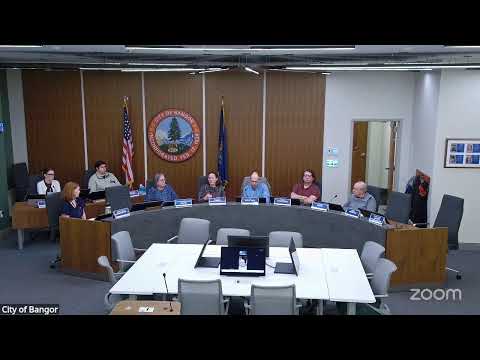
The City of Bangor Planning Board on May 5 heard a staff-led workshop on proposed revisions to the city’s temporary sales ordinance that would broaden where seasonal vendors — particularly food sellers — can operate and ease several existing restrictions.
A city staff member, Ken Hune, said the current ordinance limits seasonal truck- or trailer-based sales largely to agricultural, marine or forest products and allows food sales only in the waterfront development district. The proposal would allow seasonal food sales in most commercial zones, permit up to two vendors on a lot in the neighborhood service district, allow vendors to operate on vacant lots with the owner’s permission, raise the maximum temporary sales structure floor area from 1,000 to 2,000 square feet, remove the requirement for five additional parking spaces in some zones, reduce setbacks to 10 feet from property lines and add a prohibition on drive-thru service.
“We’re proposing is to make some changes to the temporary sales ordinance to add some flexibility for more seasonal um sales, especially seasonal food sales,” Hune said during the presentation, summarizing changes staff hopes will expand opportunities for vendors.
Board members pressed staff to reconcile language between the memorandum and the draft ordinance about whether some vendors must be removed from a lot daily. Hune explained the draft creates two categories: A1, which would require daily removal, and a second category that would allow a vendor to remain on a lot for up to 150 days; under the proposal, the second category could include food sales without the daily removal requirement.
Vice Chair Janet Jonas said she favored the revisions, praising the removal of the extra parking requirement and describing the proposal as supportive of small-business growth. “I really like the removal of the additional parking restrictions…this really encourages that progression” from pop-up to food truck to brick-and-mortar, she said, citing the local example “Dreamer Food” and its start at a venue called “Korean Dad.”
Board members also asked whether mobile vendors such as ice cream trucks would be affected; staff replied that vehicles that merely circulate through neighborhoods are not the target of the ordinance, though a vehicle that remained parked on a lot for extended hours could fall under the temporary-sales rules. Staff noted the ordinance covers merchandise as well as food.
Hune told the board that if the planning board and city council are agreeable, staff would prepare a formal ordinance for public notice and advertising and expected the item to return at the board’s first June meeting for formal consideration.
The board also conducted two routine votes at the May 5 meeting: approval of the April 21, 2026 minutes and adoption of findings for 96 State Street and 2645 Broadway; both actions passed on roll-call votes.
What’s next: staff will refine the draft, complete required notifications and, barring substantial changes, present the ordinance for formal review and public comment at the board’s June meeting.