Get Full Government Meeting Transcripts, Videos, & Alerts Forever!
Get email alerts on the Sidewalk Ordinance topic
No spam. Unsubscribe anytime.
Bangor panel recommends substituted sidewalk ordinance emphasizing support‑based engagement and ADA clarity
Summary
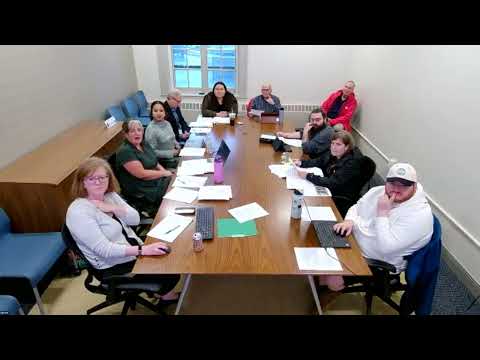
At a special Bangor City workshop, committee members voted 7–1 to recommend substituted language to chapter 257 that narrows scope to objects, adds ADA‑focused definitions, requires outreach ('support‑based engagement') before enforcement, and ties civil notice procedures to existing city policy.
At a special Bangor City workshop, the committee reviewing a proposed amendment to chapter 257 (sidewalks) voted to recommend substituting new draft language that narrows the ordinance scope to materials and objects, adds clearer ADA access language and definitions, and requires support‑based engagement before civil enforcement.
The substitute text, which the committee approved 7–1, would add a new subsection to chapter 257 (proposed 257‑7) that: defines “obstruction” and clarifies what counts as a required passing space; prioritizes outreach and connection to services (“support‑based engagement”) before penalties are imposed when feasible; requires that ADA access points remain clear; and references existing city procedures for handling unattended belongings and storage retrieval.
Committee members reopened the item after an initial motion to approve the ordinance as written failed earlier in the meeting. Speakers emphasized two recurring goals: avoid legal exposure under federal disability laws by spelling out ADA access requirements, and avoid criminalizing people by focusing enforcement on materials rather than on the mere presence of an individual.
City Solicitor Dave Sack advised placing definitions near the start of any ordinance so readers and enforcers understand terms up front, saying, “Definitions are usually put toward the beginning of an ordinance so that you can see what you’re talking about before you get into the substance.”
The committee debated operational details for enforcement. Members proposed a 24‑hour notice for non‑emergency obstructions and discussed tying any notice and storage handling to an existing city policy that already includes a 24‑hour notice provision for city‑owned property. The draft also calls for the city to prioritize outreach—case management, day programs and shelter referrals—before imposing civil penalties when practicable.
On penalties, participants suggested keeping civil fines small and progressive; one speaker proposed a $50 civil penalty for a first violation and up to $100 for a second violation within six months. Several members urged that penalties remain a last resort in favor of outreach.
Speakers also raised practical and safety questions—how officers should assess hazardous items left unattended, how property owners should be treated when items are left in front of private residences, and how the ordinance should or should not overlap with other local laws such as loitering or littering provisions. The committee agreed to reference existing policies rather than attempt to replicate detailed storage or hazardous‑item procedures in the ordinance itself.
After the committee vote, members confirmed the substitute language will be provided to city council for the ordinance’s second reading (noted in the meeting as scheduled for the 11th), and arranged to circulate the final draft prior to that hearing. Committee members said a representative (including remote attendance) will be available at council to answer questions.
The committee adjourned after completing its recommendation and assigning follow‑up steps to staff.