Get Full Government Meeting Transcripts, Videos, & Alerts Forever!
Get email alerts on the Wyoming Business Council topic
No spam. Unsubscribe anytime.
Joint Appropriations to study Wyoming Business Council, including consensus grants
Summary
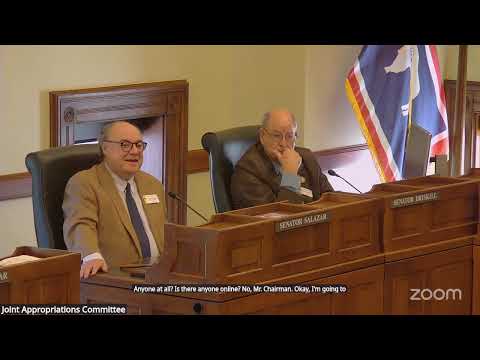
The Joint Appropriations Committee voted to add a focused review of the Wyoming Business Council and its consensus grants to its interim work plan, with chairs emphasizing reform and coordination with the House Minerals Committee. Local economic‑development groups urged clearer funding and accountability.
The Joint Appropriations Committee voted to add an in‑depth review of the Wyoming Business Council (WBC), including its countywide consensus grants and funding mechanisms, to its interim work plan. Co‑chairs said the committee will pursue reform rather than removal of the WBC and will seek collaboration with the House Minerals Committee on the topic.
Why it matters: The WBC manages programs and loans tied to statewide economic development; committee members and municipal leaders told lawmakers that clarified funding, measurable performance metrics and better coordination with county economic developers could improve outcomes.
Co‑chairman (unnamed) told members the body has discussed the WBC extensively and “I do believe that the body has spoken… I think it’s important that we start on this path of reformation.” He framed the work as a potentially multi‑day, deep‑dive effort and encouraged collaboration with the House Minerals Committee for portions of the review.
Ashley Harpstreet, executive director of the Wyoming Association of Municipalities and administrator for the Wyoming Economic Development Association, told the committee local governments want alignment between state and local economic‑development efforts. Harpstreet urged the panel to examine funding mechanisms, statutory authority, accountability, program duplication and measurable metrics. “Quit picking winners and losers and let’s pick our communities,” she said, urging predictable, local infrastructure funding so communities can market sites to prospective businesses.
Brad Enzy of the Wyoming Economic Development Association asked the committee to consider scheduling the WBC review later in the summer so WEDA can complete outreach in all 23 counties and provide fuller, boots‑on‑the‑ground data to inform the discussion.
What the committee decided: Members narrowed the interim list and, by voice vote, approved a motion to prioritize the WBC review (including consensus grants and consideration of long‑term funding), the Wyoming retirement review and a funding evaluation for services to people who are deaf and blind. Chairs said staff will prepare the topics for inclusion in the letter to management council and will work with the Minerals Committee where appropriate.
What’s next: Committee staff will finalize meeting timing and materials; members discussed dedicating extended meeting time or off‑site sessions to allow a thorough review of the WBC’s programs and funding structure.