Get Full Government Meeting Transcripts, Videos, & Alerts Forever!
Get email alerts on the Whole Child Goal topic
No spam. Unsubscribe anytime.
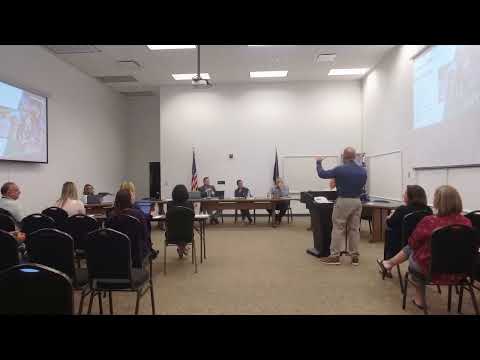
Lapeer Community Schools unveils 'Whole Child' board goal to boost social-emotional climate and safety
Summary
District staff presented Board Goal 4, centered on the Whole School, Whole Community, Whole Child model, with benchmarks including 100% school adoption of 10 components, a 75% target on annual perception surveys, third‑party safety assessments and a measurable 5% reduction in repeated behaviors.
Lapeer Community Schools staff introduced a new Board Goal aimed at "fostering an environment where all stakeholders are supported to improve whole child and Safety and Security Systems," presenting the Whole School, Whole Community, Whole Child framework as the district's focus for the coming year. The district said the benchmark is that 100% of schools will support the 10 components of the model, which include physical education, nutrition, health education, social-emotional climate, counseling, health services, staff wellness, community involvement, family engagement and physical environment.
The board goal presentation stressed that the district will prioritize social-emotional climate as part of the transition to a 7–8 configuration next school year. A district presenter said the model connects health and academic achievement and cited state-required perception surveys as one measurement tool: "one of our measurements is 75% approval rating on that annual perception survey," the presenter said. Staff also described a target of a 5% decrease in repeated behaviors as a measurable outcome if the whole-child supports are in place.
Administrators outlined programs and approaches meant to support the goal. Assistant principal Mr Cross described Positive Behavior Interventions and Supports (PBIS) work, monthly administrative and staff committees, and incentive programs such as monthly "leader" recognitions and schoolwide activities aimed at rewarding positive behavior. Staff said they are piloting classroom movement equipment and other student engagement strategies, and that teacher instructional rounds produced a multi-page list of observable practices to carry into the reconfigured building.
The district also pointed to third-party school safety assessments as a required benchmark: those assessments will inform building-level action plans and policy changes. Presenters said some policies already brought forward to the board reflect recommendations from third-party reviews.
The presentation concluded with an emphasis on teacher professional development and a call for continued stakeholder collaboration as the district implements the new goal and prepares students and staff for the reconfiguration. The board did not take separate formal action on the goal during the meeting; the discussion was presented as a staff report and briefing.