Get Full Government Meeting Transcripts, Videos, & Alerts Forever!
Get email alerts on the Recycling And Advanced Manufacturing topic
No spam. Unsubscribe anytime.
Presenter outlines binder-jet process that turns recycled glass into 3D-printable sand with Oak Ridge support
Summary
A presenter representing Fourth and Glass Recycling Company described crushing collected glass into sand for binder-jet 3D printing and said the work was developed with Oak Ridge National Laboratory's Innovation Crossroads program; the company has collected more than 40,000 pounds locally.
A presenter representing Fourth and Glass Recycling Company described a process that converts collected glass into sand that can be used as feedstock for binder-jet 3D printing and said the work was developed through Oak Ridge National Laboratory's Innovation Crossroads program and its Manufacturing Demonstration Facility.
The presenter said only about one-third of the United States' glass waste is recycled and framed the technology as a way to divert material from landfills. "There is so much glass going to the landfill in the United States," the presenter said. "Only one third of all of our glass waste is actually being recycled."
The company, referred to in the transcript as Vitriform 3D, grinds post-consumer glass into a sand-like powder. "Vitriform 3D takes this glass waste and crushes them into sand," the presenter said. That powder is then used in a binder-jet process: a thin layer of powder is spread, an inkjet-style head deposits a binder where material should adhere, and the process is repeated to build three-dimensional parts. "When people ask me about what it means to 3D print with glass, I say, if you've ever gone to a beach and built a sand castle, binder jetting is like that," the presenter said.
The presenter described a range of potential products already demonstrated with the recycled feedstock, including countertops, floor tiles and architectural wall accents. He also said the venture started a local collection service, Fourth and Glass Recycling Company, which collects glass from residents and businesses. "We've collected over 40,000 pounds of glass to date, keeping it out of local landfills," the presenter said.
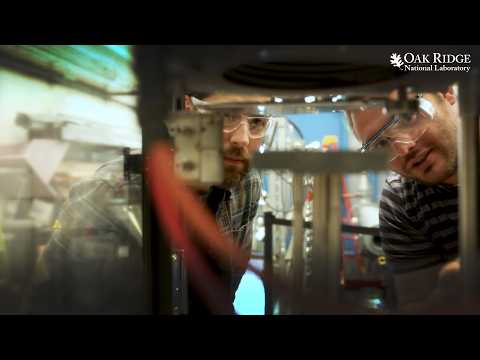
The transcript credits Oak Ridge National Laboratory and its Innovation Crossroads program with helping develop the process and giving access to the Manufacturing Demonstration Facility (MDF). The presenter said the MDF and associated mentors gave access to expertise and industry connections that helped move the work toward industrial-scale production. "Working with Oak Ridge National Laboratory gave me access to world class facilities, mentors with the right expertise and industry connections to take my ideas to the next level," the presenter said.
The presenter argued that the MDF and the broader national laboratory ecosystem provide practical pathways for small businesses to access advanced manufacturing capabilities. He noted technical and economic barriers that often limit glass recycling, including high-quality standards, low scrap value and shipping costs, and described this approach as an alternative reuse pathway rather than a substitution for conventional glass manufacturing.
The presenter did not state a timeline for commercialization or provide specific funding details. The presentation closed with a note that the technology opens new possibilities for products made from recycled glass.