Get Full Government Meeting Transcripts, Videos, & Alerts Forever!
Get email alerts on the Water Billing topic
No spam. Unsubscribe anytime.
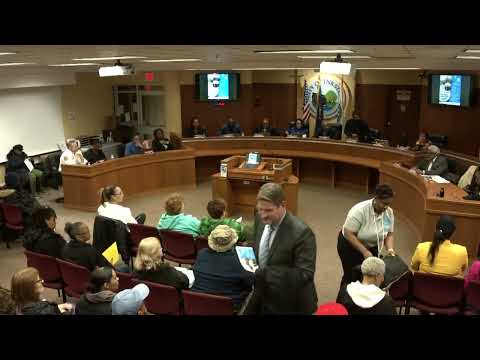
Residents report soaring water bills; Inkster officials promise investigation
Summary
Dozens of residents told the Inkster City Council on March 2 that recently replaced water meters and billing system changes produced sudden bills from typical monthly amounts of about $70–$160 to single invoices of hundreds or thousands of dollars; the city said it will analyze accounts, perform field checks and issue credits if meters are found faulty.
Dozens of Inkster residents told the City Council on March 2 that new water meters and a billing system migration have produced unexpectedly high and fluctuating bills, sometimes rising from typical monthly charges of about $70–$160 to single invoices ranging from several hundred to several thousand dollars.
The most dramatic examples came during public comment. Darlene Wilson, a lifelong Inkster resident, said the new meter at her house “hums and makes noise when there’s no water in usage” and that her bill rose to $700; she brought two neighbors with similar concerns and asked city staff to come to her home to check the meter. Dr. Schultz said their bill “went from zero to $592 … to $3,375.87 … to $4,252,” and asked the city to reduce the charge to a reasonable amount if it finds a malfunction. Milton Hunter framed the remarks as a broader fairness concern: “When a mother must weigh a rising water bill against groceries for her children, that is not just an inconvenience, it’s an injustice.”
Council members and staff acknowledged multiple complaints and told speakers the city would analyze each account. Mayor Nolan and staff said the new metering system can track continuous usage and that the city will use system alerts and on-site checks to identify leaks or meter malfunctions. City staff repeatedly told speakers that if a meter malfunction is confirmed the city will adjust the account and issue a credit.
Several residents described procedures they had tried: calling the water department, requesting field checks, paying high bills out of concern for service and in some cases receiving conflicting billing notices. One resident reported being charged for a bill that had been paid earlier and said a previous tax‑roll transfer did not clear the water balance as expected. Another resident said she had evidence (videos and receipts) that staff did not respond promptly when she reported an earlier yard geyser.
Officials described a mix of likely causes in the record: some customers previously received estimated bills under the old meters; the city replaced meters and migrated billing data; a subset of meters from earlier batches required testing or replacement. Council members said they had tested a percentage of meters that malfunctioned and that the staff would continue testing and replacement under warranty. The city asked residents to submit addresses and contact information at the meeting and through the city portal so staff could open an account analysis and follow up.
What happens next: staff said they would analyze accounts, perform field checks where alerts indicate continuous usage, and contact residents with results. If a meter is found to be faulty, staff said they will credit accounts. The mayor advised residents to call the portal or a councilmember if they do not receive follow‑up within a week.
Clarifying details from the meeting: residents reported individual bills as high as $700, $3,375.87 and $4,252; several residents described prior bills of roughly $70–$160. The council said it will deploy staff to investigate flagged accounts and that meter replacement/testing is covered by the meter warranty. The city also noted that some customers’ large balances originated during a billing migration period when the city temporarily suspended late fees while it reconciled accounts.