Get Full Government Meeting Transcripts, Videos, & Alerts Forever!
Get email alerts on the Governance Elections topic
No spam. Unsubscribe anytime.
Capitola opens public mapping phase to switch to by‑district elections; demographer outlines timeline and tools
Summary
City staff and contracted demographer Doug Johnson launched the public phase for converting Capitola to by‑district elections, walked residents through statutory criteria and online mapping tools, and outlined a schedule that includes two formal hearings on May 28 and June 11 and adoption deadlines tied to 2028 implementation.
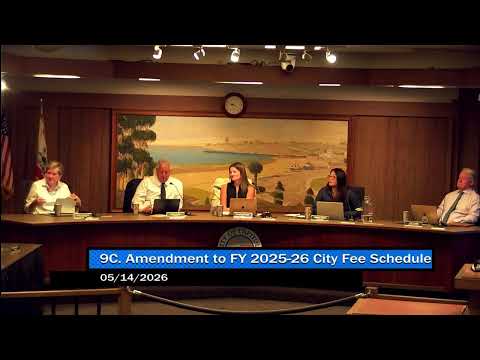
The Capitola City Council opened the public phase of a transition to by‑district elections on May 14, when the city’s contracted demographer and staff briefed the council and residents on legal criteria, public outreach and mapping tools.
Julia (city staff) and Doug Johnson of National Demographics Corporation (NDC) reviewed the statutory expectations that govern districting: equal population by federal law, contiguity, avoiding unnecessary splits of neighborhoods and communities of interest, use of identifiable boundaries and compactness. The city emphasized transparency: public maps must be posted and draft maps must be available for at least seven days before council consideration.
Johnson walked the audience through online and paper mapping tools and explained how residents can submit proposed maps and neighborhood descriptions. He said the city will not draw or adopt official maps until after two early public hearings, scheduled for May 28 and June 11, and clarified that any districts would not go into effect until the 2028 election cycle. Under the transition, two seats will become districted in 2028 while the remaining seats are phased in by 2030 unless the council selects alternative sequencing.
Staff and the demographer answered a range of procedural questions: how census numbers will be used (2020 Census is the baseline for equal‑population calculations), whether future development growth is considered (small adjustments can be made within allowable deviation ranges but projections do not replace census counts), and how the city will handle seat sequencing if incumbents’ terms or prospective candidates create conflicts between 2028 and 2030 elections.
Public commenters urged broad outreach and a town‑hall session to help residents use the mapping tools, and several speakers voiced strong concern about the demand letter that triggered the process, characterizing it as an external legal pressure on the city. Staff said they will post draft maps submitted by residents to the city website and make paper mapping kits available at City Hall. The demographer said submitted maps will be processed and analyzed; staff will post those results for public review and group similar themes to present a manageable set of draft maps for council consideration.
Next steps: the city will host the two initial public hearings (May 28 and June 11) after which draft maps will be published for additional comment and refinement. The council must adopt final maps before the July 29 legal deadline, or seek a statutory extension if warranted.