Get Full Government Meeting Transcripts, Videos, & Alerts Forever!
Get email alerts on the Local Elections topic
No spam. Unsubscribe anytime.
Committee reviews election rules: unopposed candidates, primaries, write‑ins and the canvassing board
Summary
The committee reviewed rules that unopposed candidates are deemed elected, clarified primary majority as 50%+1, reviewed write‑in qualification and canvassing board duties, and confirmed the Flagler County Supervisor of Elections oversees tie coin tosses and ballot certification.
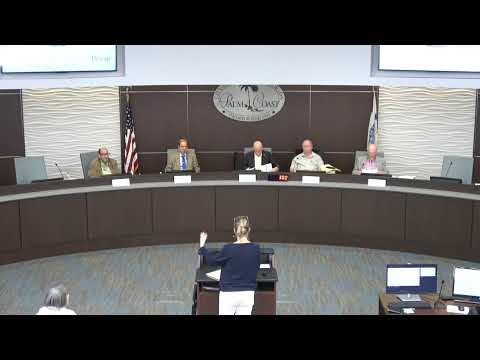
The Palm Coast charter review committee reviewed several election procedures under Article 7 and the canvassing process.
Committee members affirmed that a candidate standing unopposed would be deemed elected and not placed on the ballot, and clarified that a primary winner who receives a majority should be defined as 50% plus one vote. The panel discussed Florida’s closed primary system and explained that municipal nonpartisan races appear on all applicable ballots; write‑in candidates must qualify during the statutory qualifying period (example cited: June 8–14 in a 2026 qualifying illustration).
On ties in the general election, the committee reviewed language specifying the Flagler County Supervisor of Elections will handle the tie‑breaking coin toss at the first regularly scheduled council meeting after certification. The canvassing board role was summarized: the city clerk and a council‑designated representative will deliver absentee ballots to the county supervisor, meet at county election headquarters for certification, open ballots in the presence of a county representative, and report certified results back to the council for final filing.
The committee also discussed public confusion about party vs independent ballots and the mechanics of who can vote in primaries; staff reiterated that state law governs primaries and municipal nonpartisan races function the same on all ballots for voters within the municipality. The committee asked staff to correct cross‑references and to add clarifying language so voters understand when and how municipal races appear on ballots.