Get Full Government Meeting Transcripts, Videos, & Alerts Forever!
Get email alerts on the Municipal Audit topic
No spam. Unsubscribe anytime.
Auditors give city a —unmodified— opinion but flag internal-control and reporting issues
Summary
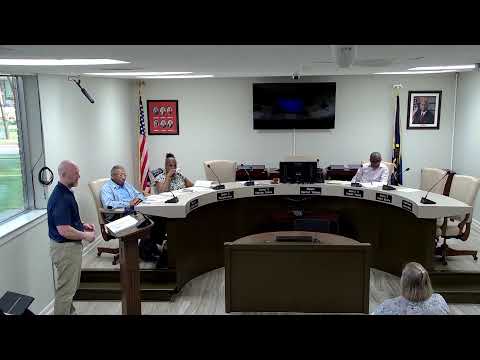
At a council work session, auditors said they issued a clean (unmodified) opinion on the city's 2025 financial statements but identified significant deficiencies: insufficient segregation of duties in the police department, payroll-control weaknesses, late report submissions, bond-disclosure lapses and budget variances; city staff outlined corrective plans.
Auditors told the City Council at a work session that they had issued an unmodified — or "clean" — opinion on the city's 2025 financial statements but found several internal-control and compliance problems that the city must correct.
"For your financial statements, the type of report we issued was an unmodified opinion," said Matthew Margagler, the engagement partner in charge of the audit, calling it "the best opinion you can get." He and audit manager Christina summarized the audit packet, which includes the independent auditor's report, the internal control report, federal-awards report and the financial statements prepared by city management.
The auditors said they found no material weaknesses in internal control but identified several significant deficiencies and instances of noncompliance. Christina told the council the report documents a set of findings that management has begun to address.
Key findings the auditors discussed included:
- Inadequate segregation of duties in the police department. Auditors said the department lacks sufficient staff performing administrative and financial functions, increasing the risk of errors or misuse. Christina said management has a plan to reassign duties and that Mary Sue — who prepares the city's management discussion and analysis — is involved in implementing changes.
- Interfund receivable/payable balances and pooled cash risk. Auditors reported significant outstanding interfund balances and said the city's pooled-cash structure created a risk that restricted resources may have temporarily financed operations of other funds. Mary Sue told the council she has a timeline for repayment of those balances.
- Payroll-processing controls. Auditors found instances where a single employee performed multiple payroll steps (time entry through payment) without documented supervisory review. The auditors recommended adding review responsibilities among existing staff to ensure supervisory approval and documentation.
- Late audit/report issuance. The city's fiscal year ends June 30; auditors noted a statutory deadline requiring audits to be completed within six months (December 31). The 2024 audit was also late, and auditors said approval to perform the 2025 audit arrived late (near Thanksgiving), compressing the schedule. The auditors said the council will be asked to approve the annual engagement letter earlier so the firm can start promptly after year-end to avoid future late filings.
- Bond-disclosure lapses. The auditors reported the city had not made required continuing-disclosure filings for outstanding bonds on the Municipal Securities Rulemaking Board (MSRB) website. City staff have a timeline to bring those disclosures current.
- Budget compliance variances. The audit flagged variances in excess of 5% in the general fund and the street fund between budgeted and actual revenues/expenditures; auditors said a formal budget amendment would be the remedy.
Council members asked detailed procedural questions, including how auditors compare departmental records to the consolidated financial statements (the budget-to-actual comparisons are shown beginning on page 64 of the report) and requested drafts be provided to councilors in advance of formal presentation so members have time to review the packet.
Auditors also explained scope limits: they can express an opinion on the financial statements but, by rule, do not issue an opinion on certain required supplementary information such as the management discussion and analysis because that subsection contains forward-looking narrative and projections. "We're not allowed to express an opinion on it," Matthew said, adding that the auditors review it for reasonableness.
During discussion of the financial highlights, a council member cited figures in the packet (mentions included "22.1 million over liabilities" and "deficits of 11.9 million"); auditors directed the council to Note 14 (page 61) for fund-level deficit details and reiterated there is a plan to address general-fund shortfalls. The cemetery fund was highlighted as a recurring deficit; council members and staff discussed causes (historic prepaid contracts priced long ago, demand for mausoleums) and potential fee adjustments.
Auditors said they will bring the engagement approval to the council agenda so the firm can begin work earlier in future years and avoid compressed timelines; councilors indicated they prefer a work session format for the audit presentation to allow time for back-and-forth.
The meeting concluded after council members thanked the auditors for the one- and multi-page summaries that accompany the full packet. A motion to adjourn was made and seconded in the excerpted transcript; no roll-call vote appears in this excerpt.
The council and staff identified follow-up steps: Mary Sue will provide timelines for interfund repayments and MSRB filings; staff will schedule the engagement-letter vote to permit the auditor to begin earlier in the year; and the council will consider any required budget amendments and policy decisions related to the cemetery fund.