Get Full Government Meeting Transcripts, Videos, & Alerts Forever!
Get email alerts on the Curriculum Compliance topic
No spam. Unsubscribe anytime.
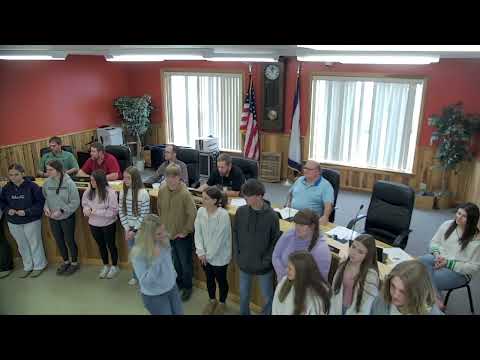
State says Aurora School’s Cyber SWAT alternative is not compliant; board discusses role-play, opt-outs
Summary
Aurora School proposed an alternative to the state-prescribed Cyber SWAT curriculum; the West Virginia Department of Education reviewed the proposal and told the district it does not meet statutory peer-to-peer observational learning requirements. The board discussed incorporating role-play and will follow up with Aurora and the department.
The Preston County Board of Education reviewed Aurora School’s proposed alternative to the state-recommended Cyber SWAT cyber-safety curriculum on May 11 after a curriculum-team presentation and a departmental review. State officials told district staff the alternative is not compliant with the statute’s explicit requirement that the SWAT education program be based on peer-to-peer observational learning and modeling as described in social cognitive theory.
Superintendent and curriculum staff said the Department of Education reviewer was complimentary about the school’s review process but concluded the suggested alternative lacked the specific peer-to-peer learning and modeling elements referenced in the law. The district discussed options to address the statutory language, including: (1) incorporating structured role-play and peer-to-peer modeling into Aurora’s alternative, (2) using the Cyber SWAT curriculum with accommodations such as read-aloud in full-group presentation, or (3) following the statute while pursuing an opt-out process for families.
Board members expressed support for local control of curriculum design but also recognized limits set by the state’s statutory language. One board member suggested modest changes—adding role-play and moderated peer discussion—could make Aurora’s materials compliant. Superintendent Martin said he had contacted a co-sponsor of the bill to discuss legislative clarification for future sessions and would meet with Aurora’s curriculum team to explore revisions.
What happens next: District staff will work with Aurora School to (a) explore modifications—such as structured role-play and group modeling—to align more closely with the Department of Education’s interpretation, (b) ensure families receive any required opt-out information, and (c) report back to the board with recommendations. The transcript records the DOE review and district follow-up but does not show any formal vote by the board on curriculum adoption at the meeting.
Quote: “Based on the information from the Department of Education … in her review of the suggested alternative curriculum she felt it was not compliant with the law,” the superintendent read aloud from the DOE’s email summary.
Ending: The district will pursue technical fixes to the Aurora curriculum and consider legislative outreach to clarify statutory implementation for future years; families retain statutory opt-out rights where applicable.