Get Full Government Meeting Transcripts, Videos, & Alerts Forever!
Get email alerts on the Housing Affordable topic
No spam. Unsubscribe anytime.
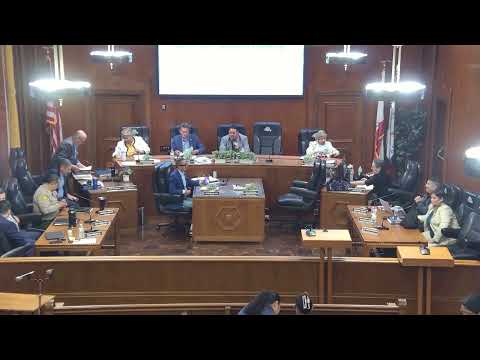
Southgate authority approves MOU with Habitat for Humanity to pursue 14 affordable townhomes
Summary
The Southgate Housing Authority and City Council authorized a memorandum of understanding with Habitat for Humanity of Greater Los Angeles to negotiate terms to develop 14 affordable home‑ownership townhomes at 9001–9019 Long Beach Boulevard; environmental remediation and financing remain to be finalized.
The Southgate Housing Authority on May 12 authorized a memorandum of understanding with Habitat for Humanity of Greater Los Angeles to establish initial terms for negotiating a disposition, development and affordable‑housing and loan agreement for a 14‑unit homeownership project on the housing authority’s parcels at 9001–9019 Long Beach Boulevard.
Gabriel Perez, the city’s community development director, said the MOU is a nonbinding negotiating framework that allows Habitat, the city and other partners to perform due diligence, underwriting and entitlement review before final agreements are prepared. Housing manager Carol Aberall presented the site history and environmental work the city and Habitat have started, describing parcels transferred from the former redevelopment agency and a later acquisition completed in April 2021.
Aberall told the council that preliminary testing identified lead‑impacted soil that will require removal and off‑site disposal. “There are about 250 cubic yards of lead‑impacted soil that will be removed,” she said, and added that demolition of a former tire shop on the site must be completed before soil remediation can begin. She said remediation work is expected to begin in September 2026 and that the removal phase would take roughly one to two weeks, with subsequent testing and reporting to the Department of Toxic Substances Control (DTSC).
Habitat representatives said the developer is assembling a funding stack. Patrick, identified as Habitat’s senior director for government affairs, said that if a family resells a home it would be sold at market price and Habitat would seek a new eligible buyer. Naomi Zer, associate director of public funding and contracts for Habitat, said the organization has spent “about $200,000” of DTSC funds so far on remediation efforts and that Habitat received an approximately $800,000 DTSC grant for cleanup.
Council members pressed staff for more financial detail before any binding commitments. Perez said the city will bring a disposition‑development agreement and an item allocating any city funding back to the council after Habitat provides a completed financing pro forma and the city completes appraisal and underwriting. He noted that HOME and CalHome funding sources are being pursued and that HOME funds typically serve as gap financing.
Mayor Joshua Baron and other council members praised the project as a step toward locally supported homeownership. The housing authority and council authorized the MOU and directed staff to finalize documents in a form approved by the city attorney.
Next steps: staff and Habitat will complete due diligence, finalize a pro forma and return later with the disposition‑development agreement, affordable‑housing agreement, and any requests for city funding allocations or loan approvals.