Get Full Government Meeting Transcripts, Videos, & Alerts Forever!
Get email alerts on the General Plan topic
No spam. Unsubscribe anytime.
Livermore council reviews Draft General Plan 2020'1045 amid debate over population figures and urban growth boundary
Summary
City planners presented the comprehensive Draft General Plan 2020'1045 and environmental review; public commenters urged clarity on population "maximum buildout" numbers, protection of industrial land and the urban growth boundary, and either removal or clarification of the "east of Greenville" study area. Council directed staff to incorporate clarifications and return with the final EIR and adoption hearings this summer.
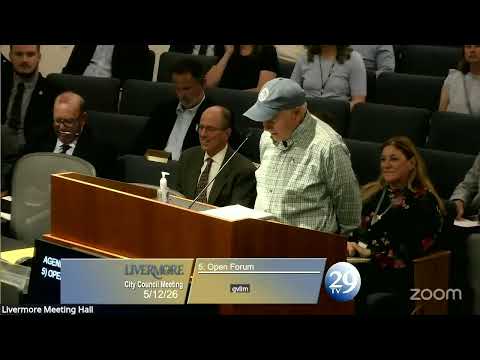
City planners on May 11 presented the Draft General Plan 2020'1045 and its draft Environmental Impact Report to the Livermore City Council, and councilmembers heard more than a dozen public comments urging clarity on growth assumptions and protection of the city's industrial land and urban growth boundary.
"This represents numerous meetings of your general plan advisory committee, planning commission sessions and ultimately check-ins with the council to receive your direction," said Andy Ross, principal planner, summarizing the draft and the plan's structure and priorities. The staff presentation highlighted downtown strengthening, infill development, protection of open space in South Livermore, and new emphases on climate resilience, environmental justice and "healthy communities." The draft also introduces an implementation chapter to track actions over time.
The council did not take final action; instead it invited community feedback and asked staff to make targeted clarifications before publishing the final EIR and returning for adoption hearings this summer.
Public commenters voiced support and concern in roughly equal measure. Several speakers, including Julie and Jean King, objected to how the EIR presents population figures, arguing headlines have read the EIR's maximum theoretical buildout numbers as forecasts. "The general plan 2045 makes the assumption that Livermore's population will increase by 50% by 2045," one commenter said, and called that projection "unrealistic." Planning staff and council pushed back, emphasizing that the population numbers in the EIR are conservative maximums used for environmental analysis and to plan for future Regional Housing Needs Allocation cycles, not predictions of actual growth.
Planning staff explained the rationale: the EIR models a high-end buildout to test potential physical impacts citywide and to preserve capacity for future RHNA cycles so the city will have sites available if state allocations rise. "Those numbers reflect a maximum theoretical buildout under the land use map," staff said; they are not targets or forecasts, and actual growth will depend on market conditions, staff added.
Other commenters urged that the plan preserve industrial and commercial land to support local employment and the city's fiscal base. Katie Marcel, CEO of Innovation Tri-Valley Leadership Group, said Livermore must "actively welcome the commercial and industrial uses that drive this innovation economy forward" and called for investments in power, high-speed communications, water and transportation infrastructure.
A recurring topic was the "east of Greenville" study area identified in the draft: several residents, including Doug Man and others who addressed the planning commission earlier, urged removing the study area language or clarifying that inclusion does not require future action. Doug Man asked the council to "add language that at least gives people permission to feel more doubtful that [a Valley Link station] is going to be built," and urged removal of the study area because community input at the planning commission overwhelmingly opposed keeping it.
Councilmembers asked staff technical questions about the EIR's population calculations, fiscal impact analysis and mapping details. City Attorney Kim Cely and staff noted the draft retains flexibility: policy-level guidance in the general plan will be followed by more specific development standards in later code amendments and specific plans. Councilmember Branding and others said they supported the planning commission's recommendations and acknowledged several requested edits and typo corrections staff will address.
Ross said next steps include publishing the final EIR in June and scheduling planning commission and city council adoption hearings this summer. Councilmembers stressed the plan should be clear about the difference between maximum buildout assumptions used for environmental review and realistic projections of future population growth.
The council's direction to staff was procedural: incorporate clarifications consistent with Planning Commission recommendations, correct identified typos and factual errors, and return with the final EIR and adoption hearings later in the summer.