Get Full Government Meeting Transcripts, Videos, & Alerts Forever!
Get email alerts on the Financial Empowerment topic
No spam. Unsubscribe anytime.
Greater Jackson Financial Empowerment Center says city investment yielded about $660,000 in local benefit
Summary
Presenters told Jackson City Council the Greater Jackson Financial Empowerment Center served 82 local residents last year, produced a roughly $660,000 economic benefit (a reported 4.4:1 return on the city's investment) and relies on a mix of city funding and outside grants; a client testified to buying her first home after counseling.
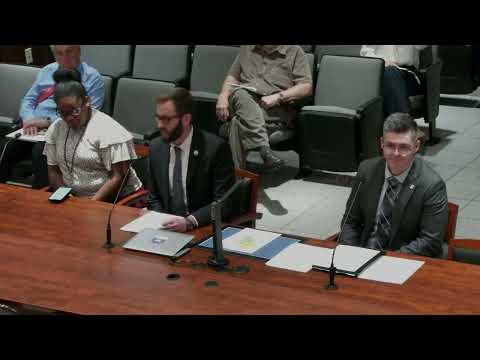
Tyler Carter, director of the Office of Financial Empowerment for the City of Jackson, told the council on May 5 that the Greater Jackson Financial Empowerment Center (FEC) used the city’s investment to generate “approximately $660,000 of economic benefit,” a roughly 4.4‑to‑1 return on the city’s contribution.
The presentation outlined program outputs and outcomes that staff say produced that benefit locally. Jordan Howardon, regional director for the FEC, said the program served 82 Jackson residents this year (66 new to the service), delivered about 216 counseling sessions and worked with clients who collectively carried about $5.8 million in debt. He reported measurable results including $98,000 in reduced non‑mortgage debt, $31,000 added to client savings, credit‑score improvements and four first‑time home purchases.
The presentation framed the center as an economic‑development tool as well as a social service. “Because the city is committed to financial empowerment work, we’ve been able to bring in new partnerships, bring in new funding,” Carter said, arguing the program helps residents participate more fully in the local economy.
Council members heard a client’s account. Victoria Jackson said she entered counseling in 2022, rehabilitated student loans, saved for a down payment and was able to purchase a home in 2024. “Working with the financial empowerment center didn’t just give me a chance to manage my money. It gave me the confidence to think better and plan long term,” she said.
During questions, staff clarified funding and scale. Howardon said client volume had grown “about 20 to 25%” year‑to‑year. On funding, presenters said the local FEC office’s operating budget totals about $263,000, which includes the city’s contribution (clarified in discussion as $130,000) and roughly $113,000 in outside grants; staff also cited an approximately $95,000 contribution from DHS and other partner support in referrals and outreach.
Council members and staff discussed outreach: referrals come by word‑of‑mouth, social media, integration partners such as Habitat for Humanity’s homeownership program and local service providers that make direct referrals. Staff said they can provide district‑level client lists to council members on request.
The council did not take a vote on the program; the presentation was followed by routine agenda business. Speakers urged continued support while acknowledging council’s budget scrutiny and offered to provide additional district data on request.