Get Full Government Meeting Transcripts, Videos, & Alerts Forever!
Get email alerts on the Budget Special Education topic
No spam. Unsubscribe anytime.
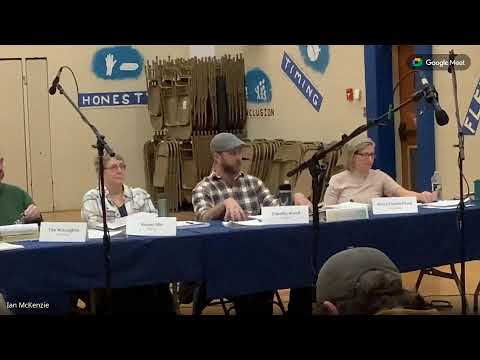
RSU 40/MSAD 40 board hears community objections to cuts as administration outlines special-education reorganization
Summary
School leaders presented a plan to centralize special-education services, repurpose positions and pursue revenue through a billing coordinator while community members urged preserving small schools and keeping sixth grade in elementary buildings; the board asked administration for more detailed budget and IEP‑coordinator impact analyses.
RSU 40/MSAD 40 administrators laid out a tightened budget and a proposed reorganization of special-education services, prompting lengthy public comment from parents and teachers who warned the cuts would harm students and community schools.
The district reported projected enrollment of about 1,639 students and said roughly 26% of the population currently receives special-education services. Administration representatives said contract-driven cost increases and a roughly $860,000 revenue shortfall require further reductions; they described earlier cuts totaling about $1,193,497 plus an additional $496,234 identified at the meeting and said the operating budget is roughly $40.8 million. Under current assumptions the administration said the net taxpayer increase would be in the neighborhood of $2.27 million, and that organizers had revised the requested increase from an initial 5.6% to an adjusted figure near 3.9.
The administration presented a second-phase plan to centralize certain special-education functions: convert a vacant position to a school-based social worker at Miller, repurpose a high‑school resource teacher role into a multi‑school IEP coordinator (sometimes referenced in the meeting as an IEP coordinator), consolidate some specialized programs across campuses, and create or repurpose a billing coordinator post intended to recover additional revenue. Presenters said the intent was to strengthen program fidelity, balance caseloads and free classroom teachers to focus on instruction.
Teachers and parents pushed back. Richard Siegel, a fifth- and sixth-grade teacher, cited research and classroom experience arguing sixth graders fare better remaining in elementary schools and warned that moving younger adolescents into a middle‑school setting can raise disciplinary and social-emotional risks. Multiple parents and community members described Friendship (Friendship Village) and other small schools as community hubs, said cuts were being perceived as disproportionately targeted to classroom teachers and specialists, and asked the board for alternative budget scenarios that would preserve those schools.
Public commenters and several board members also questioned operational details of the special-ed plan: how many students receive one-to-one supports, whether conversions of resource‑teacher roles would increase class sizes, how counseling coverage would be provided across buildings, and what certification or schedule changes accompanying shared positions would look like. Administration representatives answered that some changes would be phased to avoid immediate instructional disruption, that projected special-education caseloads were growing (a start‑of‑year projection mentioned was about 433 students), and that a billing coordinator could increase revenue to offset some costs. The meeting transcript contains varying numeric renderings; where numbers were unclear the board asked administration to provide line‑item scenarios.
No final vote was taken. A board member moved that administration return with additional, line‑item budget scenarios showing the effect of retaining or removing the proposed positions (including the billing coordinator), clear impact estimates for the IEP‑coordinator role and the consequences for class size and student supports, and voter‑facing tax scenarios for any bond or budget questions. The board directed staff to publish the slide materials and Q&A responses and to present revised figures at a follow-up meeting.
Next steps: administration will provide the requested, program-level budget scenarios and clarifications about caseloads, one-to-one supports and certification impacts before the next scheduled meeting; no consolidation or staff terminations were finalized during the session.