Get Full Government Meeting Transcripts, Videos, & Alerts Forever!
Get email alerts on the Managed Access topic
No spam. Unsubscribe anytime.
San Marcos staff recommend continuing managed access at Rio Vista, propose nonresident river fees
Summary
After a 2025 managed‑access pilot that staff say reduced crowding and litter, San Marcos parks officials recommended keeping controlled entry at Rio Vista with a more attractive temporary fence and proposed nonresident fees (examples: $25 per group or $5 per adult) to help fund upkeep; council asked staff to return with options on fees, residency proof and season passes.
City staff told the San Marcos City Council on Oct. 8 that a managed‑access pilot at Rio Vista this summer helped reduce crowding, lowered litter collections compared with 2024 and improved public‑safety response, and recommended continuing managed access with a more aesthetically pleasing temporary fence.
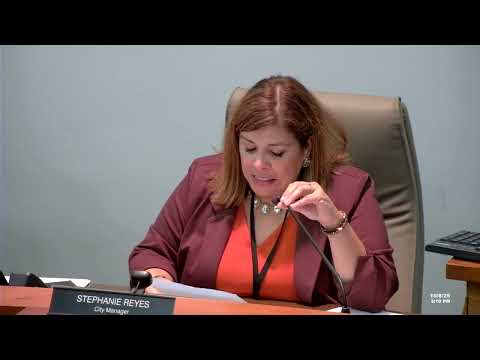
The recommendation came in a presentation by City Manager Stephanie Reyes and Director of Parks and Recreation Jamie Lee Casease. Casease said a combination of park ambassadors, EMT‑based park rangers, contract trash crews (ESPI, formerly Easter Seals) and new traffic‑control gates helped staff “bring organization to what had previously been chaos,” and allowed staff to limit high‑risk behaviors while avoiding widespread punitive enforcement.
Staff described operational changes introduced for Memorial Day–Labor Day weekends, including four managed entry points operated by park ambassadors on peak days, an exit‑only route to protect riparian areas, and a May 21 installation date for the temporary fence. Casease told council the fence gave staff the flexibility to move access points as needed and that the site‑management approach reduced some intoxication incidents and shifted many minor medical calls to park rangers rather than EMS.
The presentation included year‑over‑year litter metrics (staff said September data were pending) and noted several contributing factors to lower summer numbers, including storm‑related crowd changes around the Fourth of July. Casease also said staff acquired a higher‑quality temporary fence option within existing budget in 2025, and reported a vendor quote of about $75,000 to purchase a more permanent‑looking layout (staff previously rented fencing in 2025 as part of a $30,000 package with portable toilets).
Public commenters endorsed managed access in the presentation. Resident Andrew McNair suggested nonmonetary options for nonresidents, such as “pick up trash and return a bag of trash … in exchange for free entry,” while volunteer coordinator David Zbrano said the temporary fencing and contractor pickups had “worked” to reduce litter compared with the prior year. Resident Laura Wild said the fence protected erosion‑sensitive riparian areas near Chetum Street and allowed residents to return to weekend use.
Staff proposed potential fee structures for nonresidents during managed‑access days (weekends and holidays between Memorial Day and Labor Day): an example group rate of $25 for up to 10 people, a $5 individual fee for adults, reduced child and senior rates, and optional season passes (staff suggested $100 for an adult season pass and $75 for children/seniors/military as examples). Casease compared local precedents in New Braunfels, Wimberley and Austin to show varied fee and pass models.
Council discussion focused on equity and logistics: how to verify residency (in‑person cards, library proof, digital uploads), whether passes should be per person or per household, whether to exempt San Marcos ZIP‑code residents or San Marcos ISD families, and whether a season pass for nonresidents would be attractive at the proposed price. Council Member Amanda Rodriguez voiced philosophical concerns about charging access to a public natural resource, calling the question “uncomfortable,” while other members expressed support for shared cost of upkeep and directed staff to develop options that protect resident access.
Council did not adopt a formal ordinance at the meeting. Instead, members gave staff direction to develop concrete options on fee levels, residency verification, season‑pass alternatives and operational timelines, and to return with those proposals for public review before the next managed‑access season. Mayor Houston and several council members asked that staff present options with annual review checkpoints and include an evening work session to allow broader public input.
What’s next: staff will present refined fee and pass options, residency‑verification procedures and budget/revenue projections at a future meeting and an evening workshop so council and the public can review the proposed implementation details and timing before a final policy decision.