Get Full Government Meeting Transcripts, Videos, & Alerts Forever!
Get email alerts on the Teacher Collaboration topic
No spam. Unsubscribe anytime.
Teachers describe Collaborative Learning Communities as a vehicle for shared planning and targeted interventions
Summary
Instructional coaches and teachers told the board that daily or weekly Collaborative Learning Community (CLC) periods let course-alike teachers plan, analyze common assessments and design interventions; teachers said CLCs reduce isolation, support special-education alignment and help identify students for targeted supports.
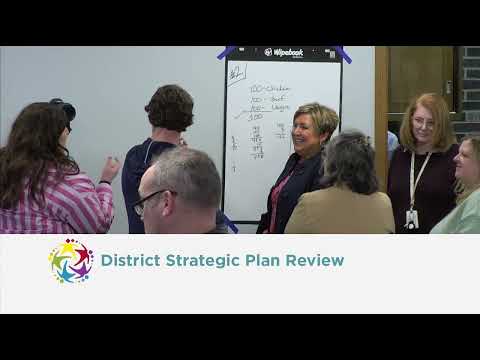
Instructional coaches from the district's high schools, middle schools and elementary schools described Collaborative Learning Communities (CLCs) as a central strategy for improving instruction and supporting teachers. Megan Capesius (instructional coach, Dubuque Senior) and Andrea Runde (instructional coach, Hempstead) explained that high schools aim for a daily CLC period where course-alike teachers plan around a teach-assess cycle, analyze assessment results and coordinate interventions.
Chris Burke (instructional coach, Roosevelt) described a middle-school approach that used a teacher survey to identify CLC strengths and weaknesses and then structured heterogeneous professional learning and instructional rounds to share effective practices across teams. Elementary teachers outlined weekly grade-level CLCs that use the KUD (know/understand/do) process and common formative assessments to adjust instruction and form fluid small groups.
Teachers said the collaborative work helps both struggling and advanced students: teams identify who needs intervention and who should be accelerated. Special-education and EL/ML teachers participate in CLCs to align supports and accommodations. Board members asked whether CLCs had reduced failure rates; coaches said teams use data (including Power BI) to name students and plan interventions but did not present a specific district-wide failure-rate statistic during the session.
Why it matters: CLCs institutionalize teacher collaboration and data use, which staff said improves instruction and reduces isolation for newer teachers. The approach also provides a structure for targeted interventions and professional learning across grade levels.
Presenters asked board members to consider questions around data access and student-facing data practices in future reports; coaches said CLCs are evolving and that their ultimate goal is teacher-led teams that routinely use assessment data to inform instruction.