Get Full Government Meeting Transcripts, Videos, & Alerts Forever!
Get email alerts on the Parks Trails topic
No spam. Unsubscribe anytime.
Equestrians urge Lasal County board to keep e-bikes off horse trails ahead of April vote
Summary
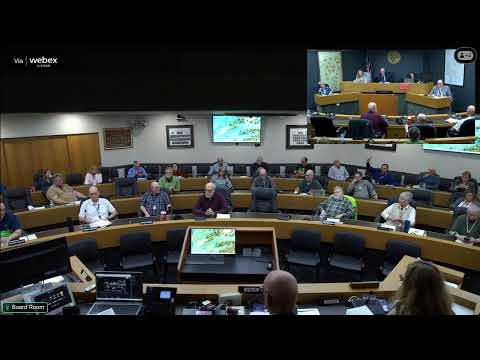
Dozens of equestrians told the Lasal County Board on March 9 that silent, faster e-bikes pose safety, liability and erosion risks on horse trails and urged the board to keep trails horse‑only; board members said the measure will be discussed again in April.
Dozens of equestrian riders urged the Lasal County Board on March 9 not to allow electric bicycles on horse trails, saying speed differentials, silence and trail erosion put riders, children and horses at risk.
Tony Troyer, president of the Horseman's Council of Illinois, told the board that horses typically move at 4–6 miles per hour while class‑1 e‑bikes can reach up to 20 mph. “If an accident happens, the least is some bruises, some scrapes. The worst case, we could have an air medevac,” Troyer said, urging the board to consider separate trails or strict monitoring. He told the board the issue is scheduled for discussion and a vote in April.
A speaker who identified himself as a former insurance and safety executive said horses are easily spooked and warned of potential insurance exclusions if horses and e‑bikes are mixed on the same trails. “You can’t have horses and bikes on the same trail,” he said, urging separation to avoid lawsuits and uninsured claims.
Caitlyn Jazzier of Earlville challenged what she described as inaccurate claims about state policy, saying she reviewed an Illinois Department of Natural Resources (IDNR) statement from Nov. 26, 2025 and that IDNR limits e-bike use to public access roads and designated bike trails on IDNR lands, not shared unpaved equestrian trails. “IDNR allows e‑bikes only on public access roads or designated bike trails,” she said.
Several other commenters — including Charity Littlefield, Debbie Wild and Diane Westwood — described personal incidents, news reports and local complaints in which e‑bikes allegedly spooked horses, caused injuries or damaged unpaved trails. Wild cited national emergency‑department statistics and local examples where riders and horses were injured; Westwood raised concerns about erosion from heavier e‑bikes on narrow, unpaved routes.
Board members did not take a formal vote at the March 9 meeting. Several speakers asked the board to limit e‑bike access to paved, designated multi‑use paths and to keep unpaved equestrian trails reserved for horseback riders. The item was identified by public commenters as likely to return to the board agenda in April for formal consideration.
What happens next: the board will revisit the matter at an upcoming meeting in April, when members may consider an amendment to trail rules or a formal ordinance change.