Get Full Government Meeting Transcripts, Videos, & Alerts Forever!
Get email alerts on the School Funding topic
No spam. Unsubscribe anytime.
Legislative liaison warns Talawanda residents: state funding cuts and levy failures are squeezing schools
Summary
Mr. Wyatt told the Talawanda board Ohio policy shifts and recent levy losses have left districts underfunded, cited House Bill 186 and ongoing voucher litigation, and urged residents to contact state legislators ahead of the next budget cycle.
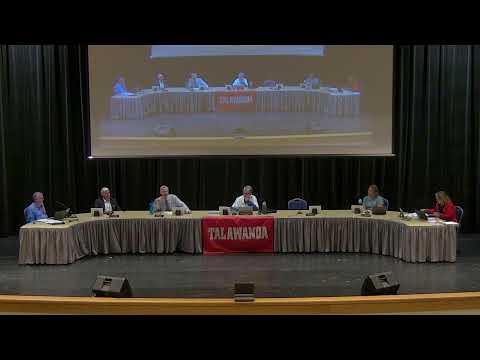
At the May 14 Talawanda City School District board meeting, legislative liaison Mr. Wyatt delivered a forceful report on state school funding that linked recent legislative action and judicial challenges to local strain on classroom services.
"Ohio public schools are caught in a vice," Wyatt said, arguing that the General Assembly walked away from a bipartisan fair funding plan and that House Bill 186 caps revenue growth for districts near a $20 million floor, which he said leaves Talawanda vulnerable. He told the board that recent local levy results (24 of 66 levies passed statewide) and specific district impacts — including teacher layoffs and cuts to field trips — illustrate the consequences of state policy.
Wyatt also discussed litigation over the EdChoice voucher program, noting that plaintiffs say the Ohio Constitution requires the legislature to secure "a thorough and efficient system of common schools" and that a final ruling could be a year or two away and may reach the state supreme court.
He urged residents to contact their state representatives and senators before the next state budget: "Find your state representative and your state senator's name. Put their number in your phone... when the next state budget comes to Columbus... I want you to call them." Wyatt framed local fundraising and levies as inadequate solutions to what he called a state-created funding crisis.
The report framed district concerns about school services, homelessness and voucher litigation as part of a broader state policy debate that the liaison encouraged residents to influence through contact and voting.