Get Full Government Meeting Transcripts, Videos, & Alerts Forever!
Get email alerts on the Maha Elevate Nofo topic
No spam. Unsubscribe anytime.
CMS details MAHA Elevate NOFO: $100 million for lifestyle-medicine model; applications due May 15, 2026
Summary
CMS’s Center for Medicare & Medicaid Innovation outlined the MAHA Elevate model, funding ($100M total; up to $3.3M per award), deadlines (LOI Apr. 10; application May 15, 2026), milestone-based disbursements, beneficiary minimums, and required application materials during a public FAQ webcast.
Centers for Medicare & Medicaid Services staff laid out details of the MAHA Elevate notice of funding opportunity (NOFO) in a public webcast, describing the model’s goals, award sizes, key deadlines and application requirements.
"We know that chronic disease is an enormous driver of both health care costs and human suffering," Sonia Madera, co-lead of the MAHA Elevate model, said, explaining the initiative will test whole-person functional and lifestyle medicine (FLM) approaches aimed at reducing avoidable disease progression among original Medicare beneficiaries.
The MAHA Elevate program will offer cooperative agreements — a grant mechanism involving substantial federal involvement — to as many as 30 organizations across two cohorts. Randy Morgan, a MAHA Elevate model co-lead with the Center for Medicare and Medicaid Innovation, said CMS plans to invest approximately $100 million into three-year cooperative agreements and that individual awards will be a maximum of $3.3 million. "These funds may not be used to provide covered services to original Medicare beneficiaries or to cover services such as food," Morgan said.
The NOFO was posted on grants.gov on March 13, 2026. Required letters of intent (LOIs) for cohort 1 were due April 10, 2026; organizations that filed LOIs must submit full applications through grants.gov by May 15, 2026. CMS said cohort 2 dates have not yet been announced and that applications do not carry forward between cohorts.
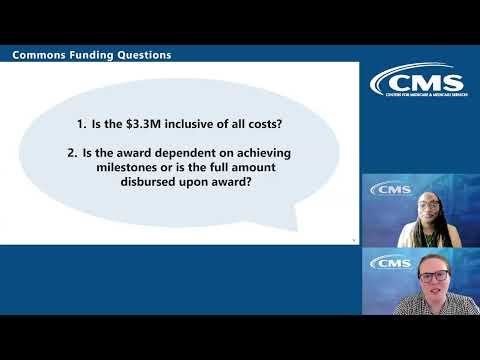
Funding and performance structure: CMS said awards will run up to three performance years (with an optional six-month pre-implementation period) and funding will be distributed in up to nine disbursements tied to operational and recruitment/reporting milestones. CMS described two enrollment checkpoints: by month 20 an awardee must meet more than 20% of its minimum beneficiary enrollment and by month 32 more than 65%. Randy Morgan cautioned that failure to meet required operational milestones will prevent future disbursements.
Eligibility and required components: Applicants must propose interventions that include at least one mandatory focus area — nutrition or physical activity — that original Medicare does not currently cover. Programs may include additional FLM focus areas such as sleep, stress management, avoidance of harmful substances and social connection. CMS emphasized that applicants must be U.S.-based organizations (including U.S. territories) and that individuals may not apply.
Sample size and evaluation: Jenny Lloyd, a model team member, said CMS will calculate awardee-specific recruitment targets based on proposed clinical outcomes and effect sizes; sample sizes therefore vary by intervention. As an illustrative example, presenters said detecting an 8-unit change in average body mass index among adults 65+ might require 1,000 treatment and 1,000 control participants (2,000 total).
Partnerships and data: CMS encouraged applicants who lack data collection or delivery infrastructure to form formal partnerships and to submit documentation (letters of support, memoranda of understanding, contracts) with applications. Presenters noted data-sharing considerations: covered entities have more direct access to CMS data flows, while non-covered entities must obtain assigned data disclosure authorizations from each patient and submit those to CMS.
Regulatory responsibilities: Applicants are responsible for assessing and obtaining institutional review board approval where required and must comply with federal human-subjects protections (45 CFR part 46) and other applicable federal and state laws. Budget notes: the $3.3 million cap is intended to cover all direct and indirect costs; applicants should not plan to use cooperative agreement funds for Medicare-covered services or food.
Application logistics: Required submission materials include the project summary (one page), project narrative (up to 15 pages), budget narrative (up to 10 pages), business assessment (up to 12 pages), project performance site form, SF-424 and SF-424A, lobbying disclosure, and partnership documentation. Applicants must register in SAM and have a login.gov account; the Authorized Organizational Representative must sign the SF-424. Templates and fillable PDFs are available on grants.gov and the MAHA Elevate web page, though templates are recommended not mandatory.
CMS will notify all applicants by email; selected applicants will receive a Notice of Award signed by the CMS grants management officer. Presenters closed by directing viewers to the MAHA Elevate web page, the grants.gov NOFO posting, and the MAHA Elevate mailbox for further questions.
The webcast also noted three award slots reserved for programs focused on dementia and cognitive decline, and that recipients who meet operational and reporting milestones can receive subsequent funding disbursements over the three-year performance period.